Montreal
Montreal's craft cocktail renaissance took root in the late 2000s, when pioneering venues began pushing the city's drinking culture forward. Le Lab on Mont-Royal earned its reputation as one of Canada's most influential cocktail bars, built on house-made syrups and fresh juices, while La Distillerie helped democratize craft drinking with its inventive mason-jar cocktails.
That foundation paved the way for a bold new generation. Cloakroom elevated the experience into bespoke speakeasy-style hospitality, the Coldroom brought technical precision to Old Montreal, and Atwater Cocktail Club anchored the movement in the Sud-Ouest with a seasonal menu rooted in Québécois terroir. Marcus Night Bar, Bisou Bisou, Bar Bello, and Bar Numero are among the most compelling recent arrivals.
Few people are better placed to explain the city's trajectory than Kevin Demers, who owns five Montreal bars. "Montreal was never historically a cocktail city in the way New York or London is," he says. "It was always food and wine, restaurants, shows, and club culture. That's what makes the cocktail scene so interesting now. It grew from operators building small, character-driven rooms with real hospitality DNA."
Below we take you on tour of several important bars in Montreal.
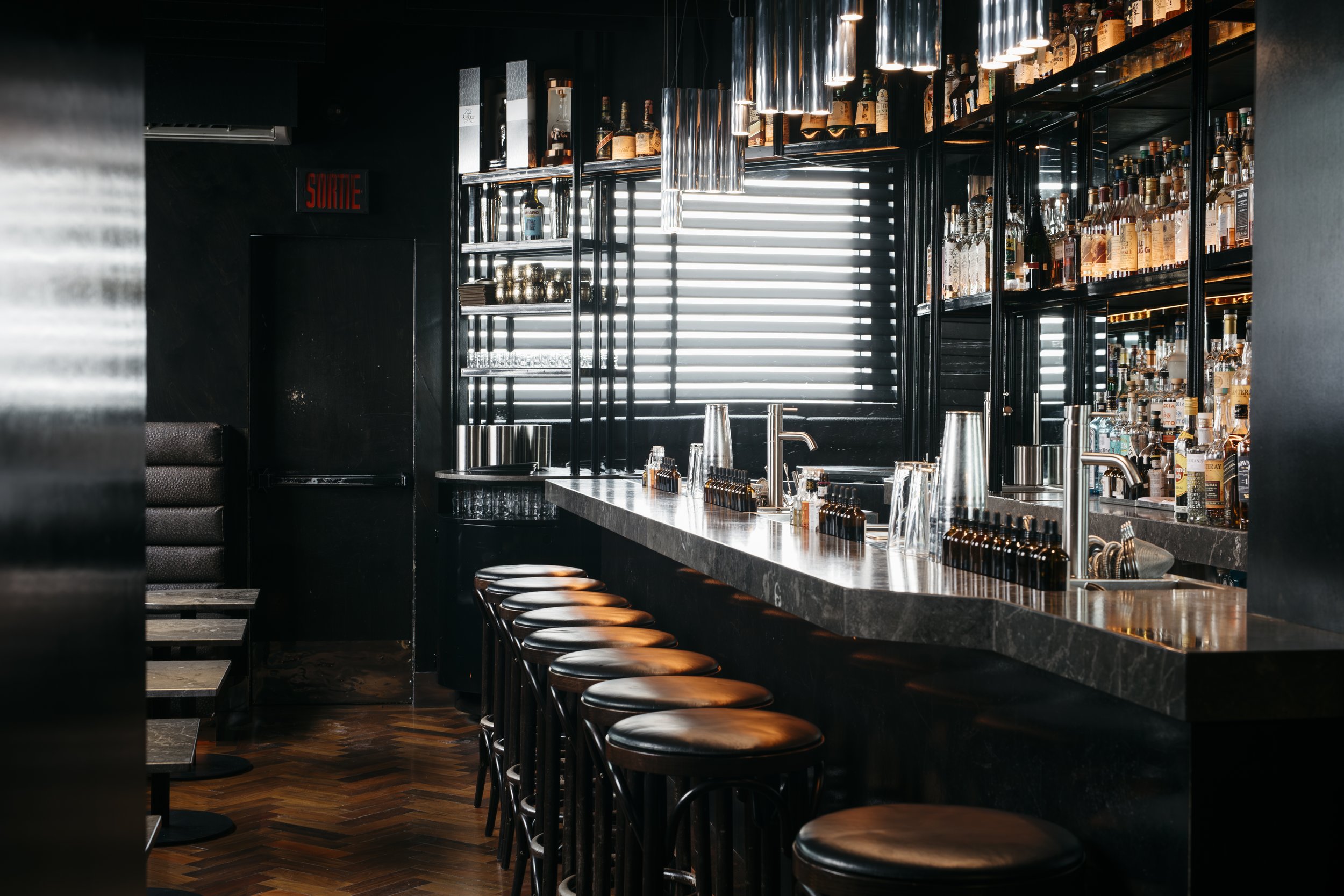
Some bars hit you with a 40-page menu, edible garnishes, and tableside smoke. Cloakroom takes the opposite approach: no menu, no reservations, no theatrics. The whole operation runs on a simple idea borrowed from fine tailoring: everything is made to measure. Which makes sense, given that Cloakroom is set behind a menswear shop in Montreal's Golden Mile. A host appears from beside the tailor shop to let you in, and from that point the experience is entirely yours. Inside, the 25-seat space feels genuinely Prohibition-era: dark wood panelling, low light, portraits of distinguished gentlemen along the entrance corridor.
Andrew Whibley opened it in 2015, having moved from Brisbane to Montreal with a clear idea of what he wanted to build. His bartending credentials were already serious (three-time World Class Canada National Finalist, Hennessy Global Award winner in 2015), but Cloakroom was less about accolades than about a particular way of working. Obsessive sourcing, deep cocktail history, no shortcuts. Over the past decade he's built a team that operates the same way.
The no-menu thing isn't a gimmick. Without one, the bartenders actually have to figure out what you want, sometimes before you know yourself. They're working from around 50 house-made tinctures, their own amari and liqueurs, rotovap-distilled ingredients, and roughly 200 bottles of vintage spirits collected over ten years. You describe a mood or a flavour, something bitter, something bright, something half-remembered, and they go from there.
While Cloakroom features no signature menu, bartender Andrew has a personal favorite called the Ofish. This spirit-forward, complex cocktail balances the rich, vanilla backbone of 60ml bourbon with the herbal bitterness of 22ml amaro. 2 dashes of chamomile tincture add a subtle floral nose, while 1 dash of allspice tincture provides a warm, baking-spice finish. To prepare, stir the ingredients with ice until chilled, strain into a Nick and Nora glass, and garnish with expressed orange zest.
Andrew has since opened elsewhere in Montreal: Bar Dominion, an oyster-focused cocktail pub downtown; Le 9e, a fine-dining restaurant and bar on the ninth floor of the Eaton Centre; and French Line, a cocktail bar with a modern French bent. Taken together, they've made him one of the people most responsible for what Montreal's bar scene looks like today.
Cloakroom
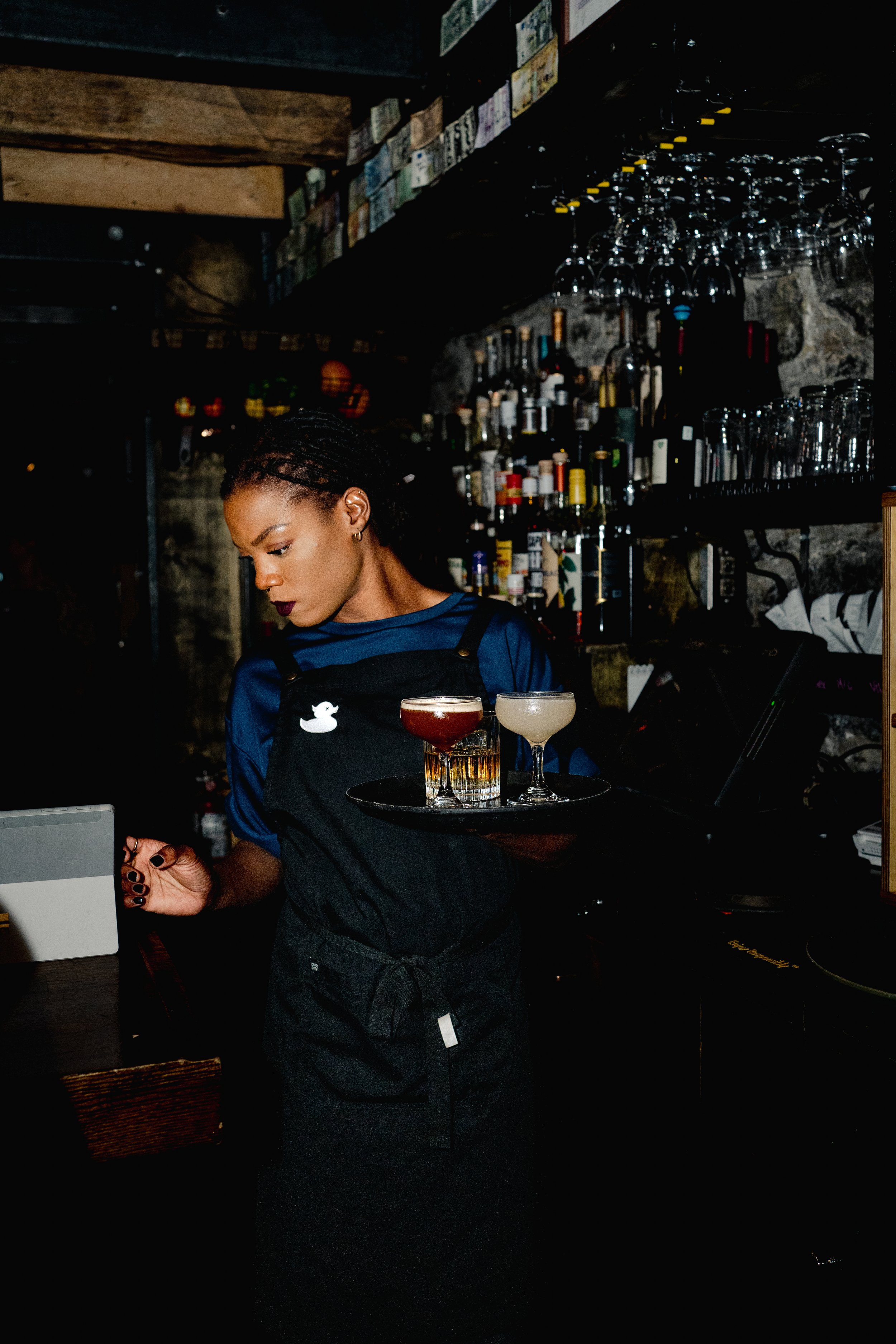
There is only a narrow lane in the historic heart of Old Montréal, a plain black door set into centuries-old stone, and a brass bell. Ring it, wait, and if the door swings open, you have found The Coldroom. Located beneath the basement of a 19th-century cold storage warehouse at the corner of Saint-Vincent and Saint-Amable, the bar has spent the past decade quietly becoming one of the most talked-about cocktail destinations in North America. Not through spectacle, but through the oldest currency in hospitality: making people feel genuinely welcome.
The Coldroom was born in 2016 from the vision of Kevin Demers, a Montréal hospitality figure whose fingerprints are on some of the city's most beloved venues. But it is The Coldroom that most purely distills his philosophy: that the guest experience begins long before the first drink arrives. Finding the door, ringing the bell, being welcomed by name, becoming part of the ritual before the first round is poured.
Bar Manager Sally Groves, originally from Sydney, brings over 15 years of experience across three continents and a deep grounding in both whisky and cocktail craft. Now nearly three years into her role overseeing The Coldroom and El Pequeño Bar, she leads a team whose ethos mirrors her own: curious, disciplined, and genuinely service-led.
The drinks program is built on a demanding premise: every bartender must know a minimum of 110 classic cocktails, not merely by name but by ratio, history, and variation. That foundation shapes everything, from how a server guides a first-time guest toward the right drink to how a seasonal menu gets built around fresh ingredients and precise technique. The menu moves across three pillars: classics delivered with precision, seasonal signatures that explore without sacrificing drinkability, and house creations built around memory and conversation. The goal is balance, creative without becoming complicated.
We asked Sally about her favorite signature on the current menu. While the menu is always changing, her personal pick is the Deathmark. Sitting somewhere between a Black Manhattan and a Stinger, it brings together a cocoa nib-infused blend of VS Cognac, Dubonnet, Cynar, and crème de menthe.
What is the secret to The Coldroom's success and staying power? According to Sally, it comes down to accessibility and authenticity: "Coldroom is a place where cocktails are for everyone. No pretension, no chasing trends or gimmicks. Our focus is on classic cocktails, technique, and hospitality.”
Ten years in, The Coldroom is neither nostalgic nor restless. The entrance is still unmarked. The bell still rings. And the door, when it opens, still delivers on the promise of something worth finding.
The Coldroom
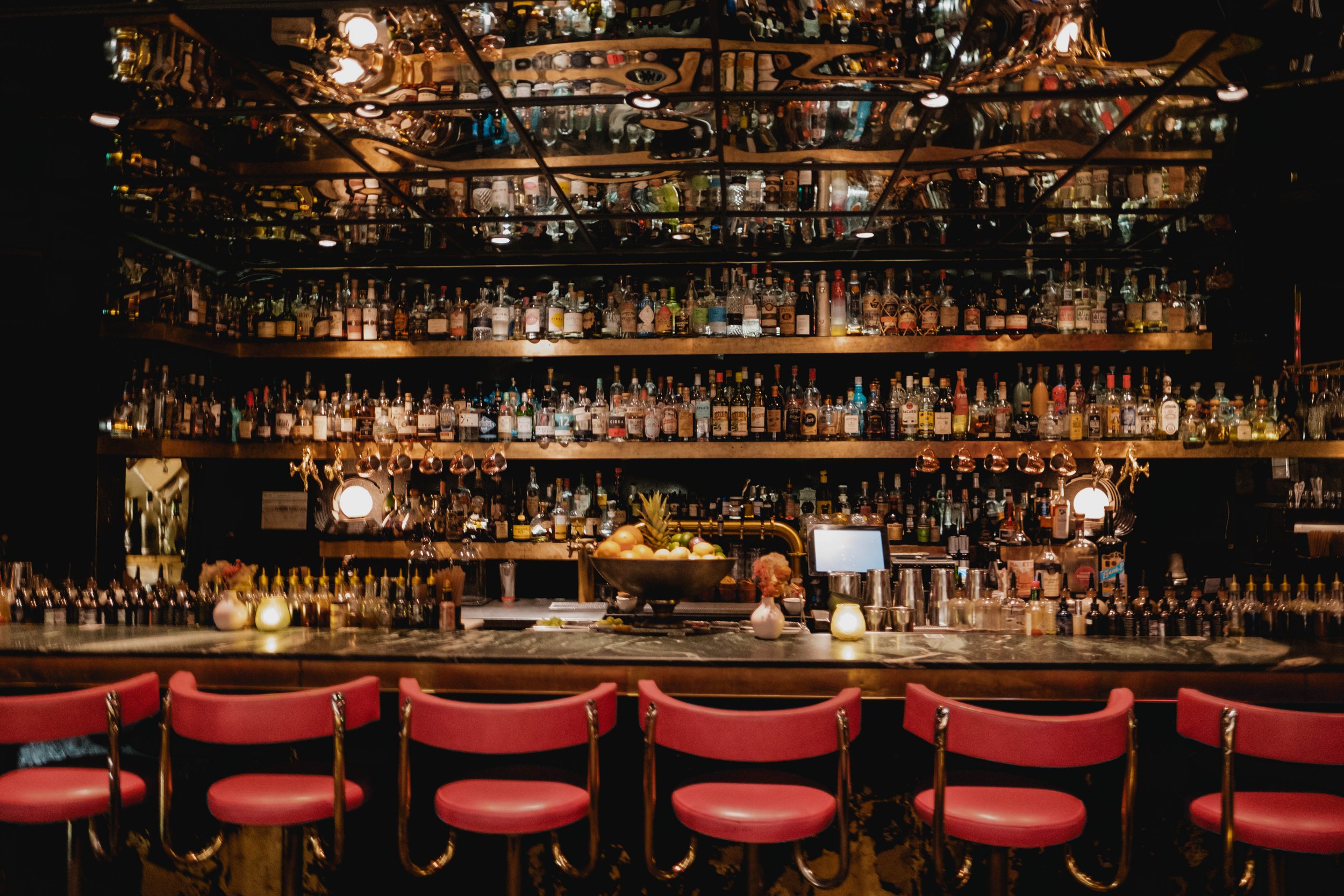
Even seasoned speakeasy devotees may find the entrance elusive (I nearly ended up on the fire escape rather than turning left past the doorman), but the interior is pure reward. Guests are met with an intimate, beautiful space where sleek marble, shiny silver banquettes, and mirrored ceilings catch the candlelight, evoking a chic, vintage French discotheque.
Founded in 2016 as a neighbourhood hangout, ACC has grown into one of Montreal's top destination bars and the flagship of Groupe Barroco, though its local vibe remains intact, thanks to regulars who still come for cinq à sept.
At the helm is Kate Boushel, Partner and Director of Education and Strategic Partnerships for Groupe Barroco. An award-winning bartender with over 15 years of experience, Kate took a nonlinear path to the top, stepping away for a career in government and public relations before her passion pulled her back. As much about community as cocktails, she champions a more inclusive bar industry through mentorship and knowledge-sharing.
Sustainability is woven into ACC's DNA. The team centralises prep across Barroco's five venues to minimise waste, repurposing flat champagne into house syrups, fruit pulps into garnishes, and natural acids to reduce fresh citrus consumption. The menu, inspired by paint swatch booklets, is printed on synthetic waterproof paper and assigns a unique colour to each cocktail, with ingredients listed in French and English, ABV noted, and discreet symbols for zero-proof options.
The creative programme is built on elegant drinks executed with serious technique, including fermentations, emulsions, and carbonation, alongside access to over 600 spirits and bespoke creations.
Although Kate is proud of many of her signatures at ACC, her current favorite is La Récolte. "La Récolte is a silky and nutty milk punch that marries pandan, Chinese dates, and Calvados, clarified with graham cracker-infused coconut milk. The cocktail is then served with a dulce de leche cookie and a quenel of pandan ice cream that is made from the left-over ricotta from the milk punch process."
Atwater Cocktail Club
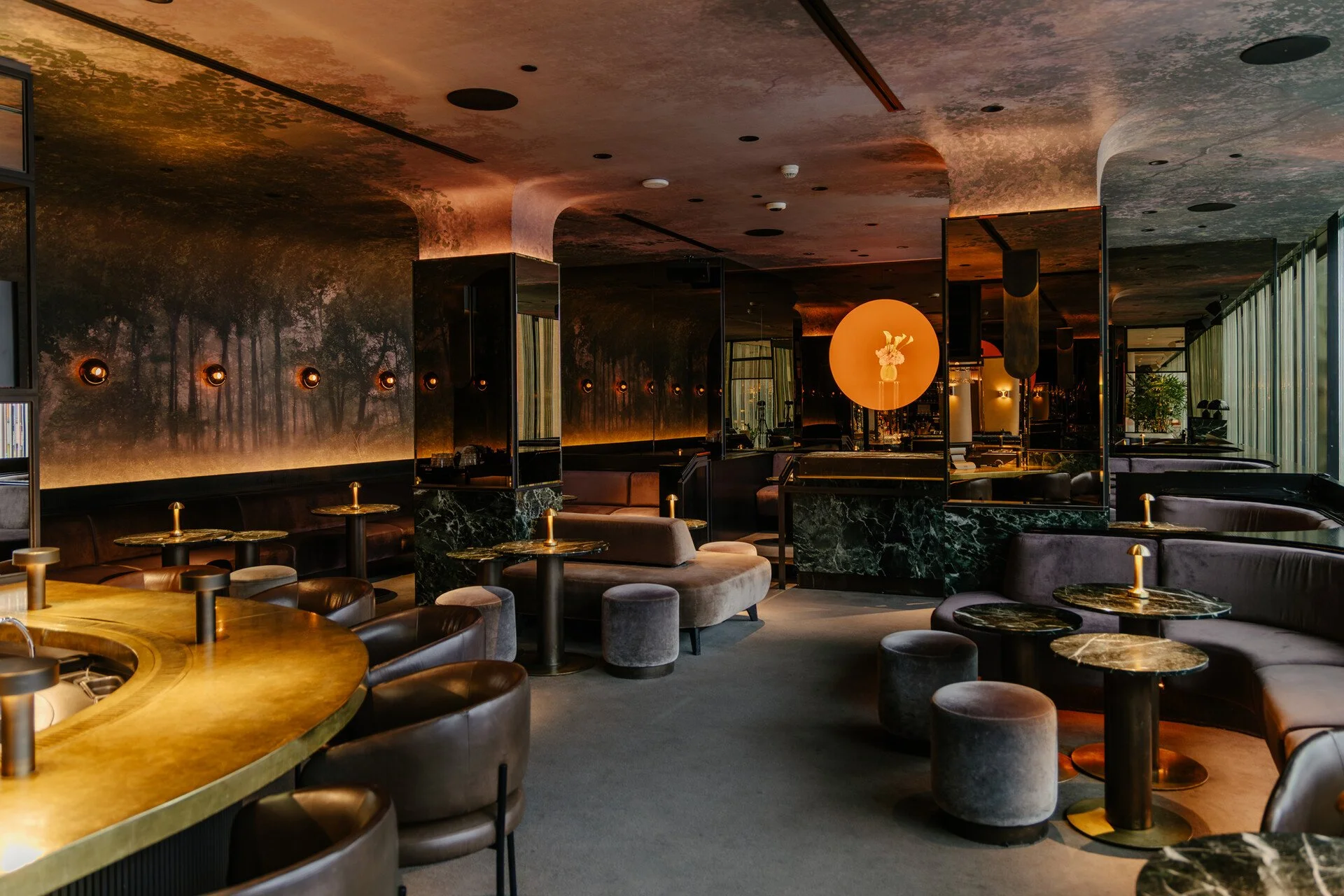
Since launching in 2019, Marcus Night Bar, located inside the Four Seasons Hotel Montreal in the vibrant Golden Square Mile, has firmly established itself as one of the city's premier nightlife destinations. It is a venue where exceptional mixology, a sophisticated ambiance, and Montreal’s vibrant after-dark energy seamlessly blend into a truly unique experience.
Spanning 9,200 square feet on the third floor of the hotel, the sprawling space transitions effortlessly across a lounge, a dedicated bar, a restaurant, and an outdoor terrace. Each area offers a different vibe, ranging from the tranquil, oceanic feel of the lounge to the warm, immersive atmosphere of the bar.
While Marcus quickly cemented its reputation upon opening, its identity has further evolved under the guidance of Jay Lawson, the current Head of Mixology. With a background in chemistry and a natural flair for cocktail creation, Jay brings a unique, scientific, yet theatrical precision to the craft. Driven by a passion for fermentation, meticulous technique, and narrative-driven drinks, he has steered the bar’s creative direction to be highly intentional and deeply rooted in its local environment.
This philosophy was fully realized in November 2025, when Jay debuted a brand-new menu featuring twelve signature cocktails and three zero-proof alternatives, all of which re-envision classic drinks from a contemporary perspective.
This commitment to the locale is evident in the bar's operations: ingredients are sourced internally whenever possible, waste is heavily reduced, and the drinks are designed to be full-sensory experiences, utilizing everything from delicate foams to aromatic mists. For Jay, technical skill and eco-conscious practices work hand-in-hand.
A standout from the new menu is the Golden Square Mile Highball, a mix of Glenfiddich 12, sesame oil, sake, coconut water, allspice, carbonation, and lime leaf. Named after the historic neighborhood surrounding the hotel, the cocktail is a brilliant study in balance. The sesame oil provides a rich complement to the Scotch’s honey notes, the sake brings a light delicacy, and the allspice and lime leaf impart a distinct, vibrant warmth.
No alcohol drinks are a major focus for Jay. "For me, non-alcoholic cocktails aren't a compromise. They're an opportunity to approach flavour from a fresh angle. Instead of chasing exact replicas of classic drinks, I focus on building balance and depth through acidity, bitterness, salinity, texture, and aromatics. The category has evolved enormously, and what people want now are drinks that feel considered and complex. Not sugary stand-ins, but something crafted with the same care and intention you'd bring to any great cocktail."
Jay's philosophy for this increasingly important drink category is showcased in the Daybreak, a crisp, slightly bitter blend of Seedlip Grove, zero-proof Gentiane Liqueur, verjus, and caper-olive brine, proving that alcohol-free mixology is an intricate art form of its own.
For guests looking to fully immerse themselves in Lawson's vision, the Night Bar Cocktail Tasting offers a curated, guided journey available from Thursday to Saturday. The experience walks patrons through five smaller-format creations from the new menu. The tasting kicks off with a highly creative, house-made tepache. Utilizing fermentation techniques, the drink is crafted from repurposed pineapple skins and cores, and is elegantly rounded out with notes of honeydew, cantaloupe, green peppercorn, allspice, clove, and a refreshing hint of mint distillate. Ultimately, every cocktail served is treated as an engaging dialogue between ingredients, technique, and setting. Jay’s scientific background ensures each drink is a revelation, featuring sequential flavors, surprising textures, and brilliant flavor pairings.
Marcus Night Bar
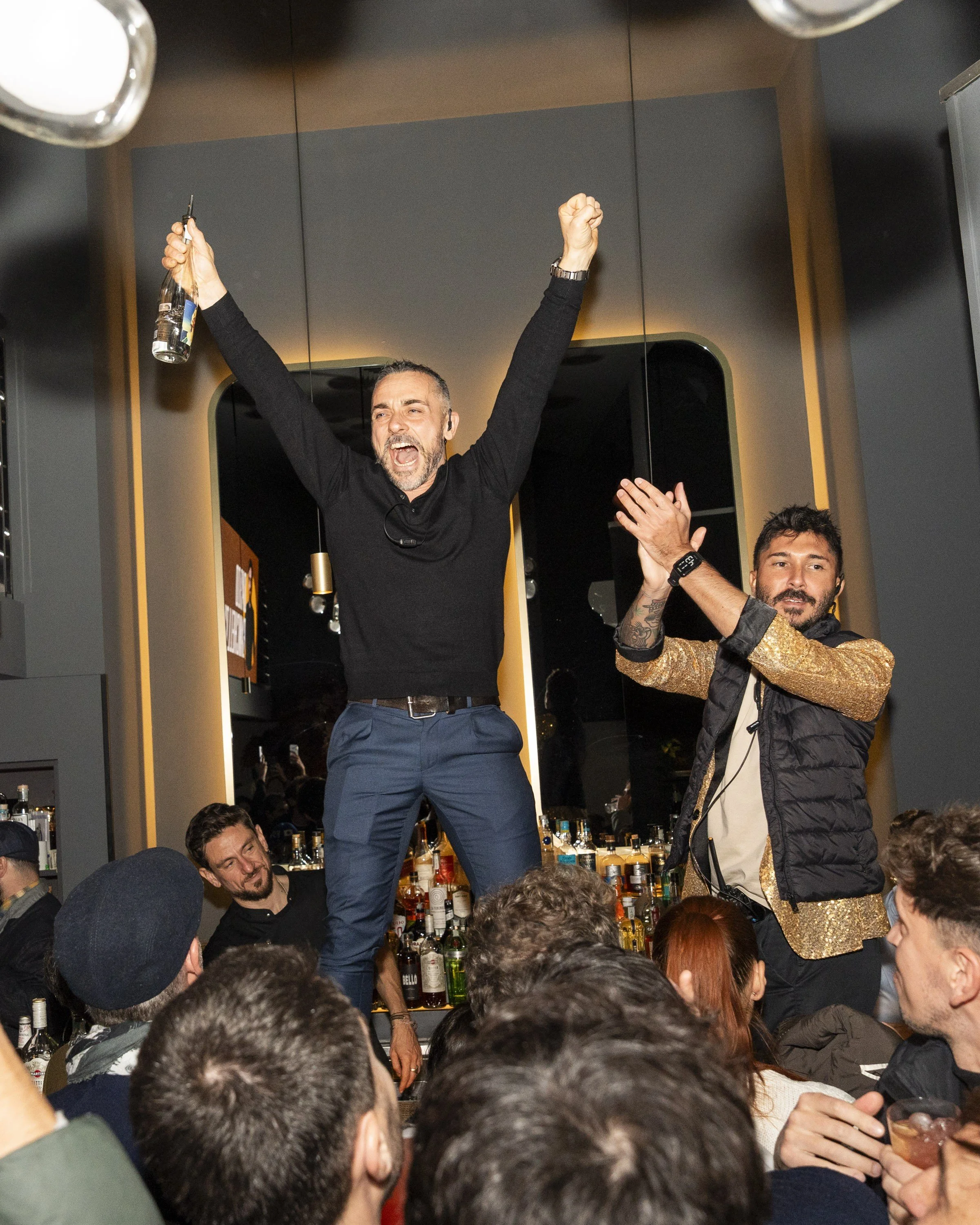
Bar Bello is not trying to hide what it is. Warm hues, dark leather, wood paneling, checkered tile floors — the room has a clear point of view. When founders Kevin Demers and Beniamino Bello opened in Montreal's Little Italy in August 2023, they were after something specific: a place where the aperitivo ritual, one of Italy's oldest social habits, would actually feel at home.
The name is a tribute to Bello's family, who immigrated from Italy in the 1970s and settled in the neighborhood the bar now calls its own.
"We built Bar Bello to bottle the feeling of a classic aperitivo experience that you could get in a small town in Italy," Demers says. "Generous, unpretentious, and a little glamorous. The kind of place where you meet a friend at six, stay past nine, and never feel rushed."
Bar manager Arnaud Savard oversees the food and drinks program, combining classic cocktail techniques with a modern approach to social drinking. The menu reflects an Italian ethos: an extensive selection of amaro and vermouth, and a cocktail list that moves through spritzes, Martinis, and amaro-based highballs. It rotates every four months, shifting with the seasons.
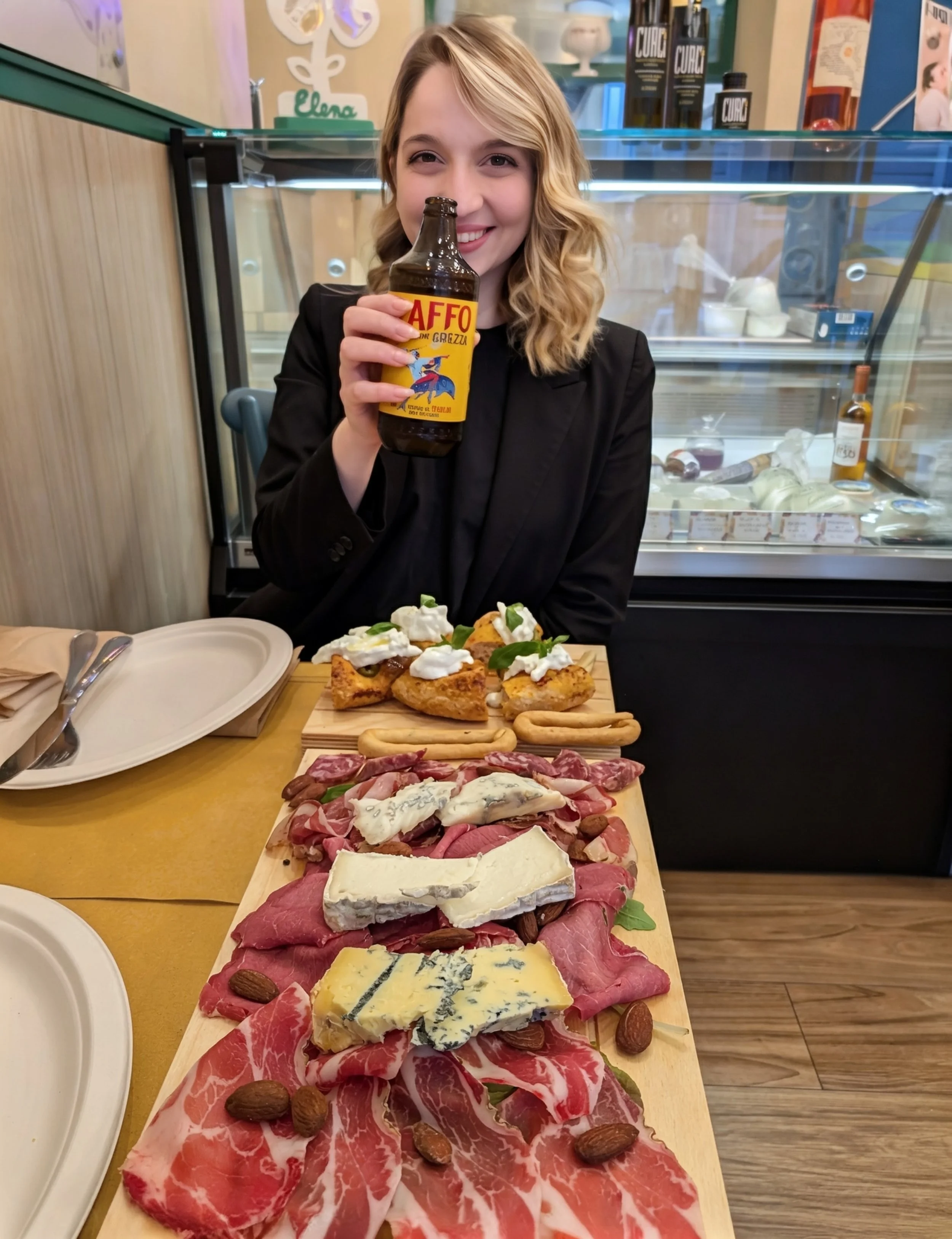
The food menu is compact by design. The Mortadella Hot Dog, rolled and fried on a brioche bun with sauerkraut and mustard, is the kind of dish that makes sense in a neighborhood that is equal parts Italian and French Canadian. The aperitivo plate keeps things grounded: cheese, salumi, marinated vegetables, exactly what you would want in front of you with a Negroni.
Most first-time visitors notice it immediately. A vintage vending machine stands near the back of the room, refurbished from a 1970s soda dispenser, stocked with bottled Negronis. The format is simple: guests pick up a token at the bar, receive a frozen glass with a large ice cube, and choose from eight variations at the machine, including infused versions, Boulevardiers, and Negroni Biancos. Seasonal options cycle through as well, rhubarb and basil giving way to apple and cardamom come autumn.
Arnaud Savard describes it as something the team had been thinking about for a while, a way to give guests a tangible, memorable moment. It has also, practically speaking, become the thing people tell their friends about.
"It gives people a hook," Savard says. "It gets them through the door, and once they're in, they fall in love with the rest of the experience."
The machine fits the room. The interior draws on Italian pop culture from the 1960s through the 1980s: Italo-disco posters, a hi-fi vinyl setup, clean lines. The references are specific and unforced.
Savard oversees the day-to-day guest experience, keeping the bar's emphasis on Italian aperitivo culture intact while treating the space as a neighborhood gathering spot rather than a destination you have to earn your way into.
"Hospitality is at the head of everything we do here," he says. "As soon as you walk in, the whole team is going to make you feel at home."
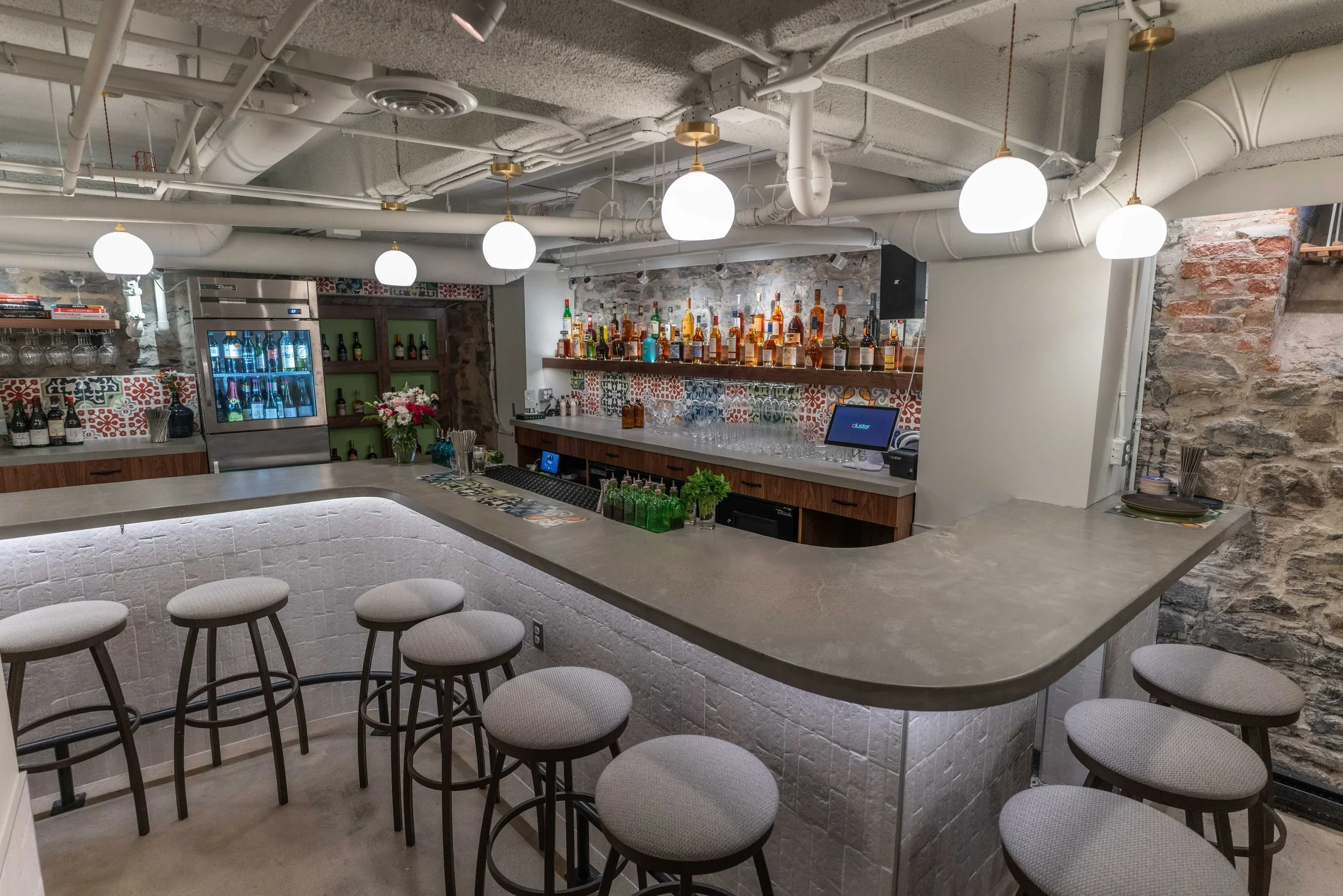
Since opening in 2023, Bisou Bisou has built its identity around the apéritif ritual: that pre-dinner moment of appetite-opening drinks and easy conversation that much of Europe has never stopped practising and North America is slowly rediscovering. Located on Rue Saint-Vincent, a cobblestone street in Old Montreal, Bisou Bisou focuses on fortified wines, vermouth, sherry, amari, and other categories that tend to get passed over in favour of something more familiar. The room reflects the concept. Bisou Bisou brings Mediterranean warmth into an Old Montreal setting, with a design that encourages small plates and slow conversation.
The cocktail menu follows apéritif logic: bright, balanced, lower in alcohol, designed to open rather than close the evening. Low-ABV and no-ABV options are treated with the same seriousness as everything else on the menu, structured and layered rather than an afterthought.
What Bisou Bisou does well is make the unfamiliar feel accessible. A guest who has never thought about sherry, or who has only a vague memory of their grandfather's vermouth, can walk in and be guided toward something genuinely delicious without feeling talked down to. The bar's tagline, "apéritif culture and community for the curious," holds up: it really is for the curious, and it genuinely functions as a community.
The food menu is built to complement the drinks rather than compete with them. Conservas, olives, bread, cheese, and charcuterie form the backbone: snackable, shareable, Mediterranean-leaning plates that extend the evening without turning it into a full dinner.
Bisou Bisou comes from the team behind some of Montreal's most respected venues: The Coldroom, El Pequeño Bar, Bar Bello, Sample, and Montreal Cocktail Fest. Founders Rob Weeks, Gregory Buda, and Kevin Demers have spent years building bars with distinct points of view, and Bisou Bisou is their most deliberately understated one.
Gregory has described the founding idea plainly: "We want guests to discover new categories without feeling intimidated, whether that's sherry, vermouth, low-ABV cocktails, or simply a new way to begin the evening."
Running the bar is Grace Honsberger-Grant, who shapes its hospitality, pacing, and overall feel. A skilled drinks creator with a genuine passion for amari, she is the right person to ask about the backbar.
When it comes to signature drinks, the current team favorite is The Tripoli. According to Grace: “The Tripoli is a vibrant mix of Lillet Blanc, gin, and a house-made labneh-washed Campari, which clarifies the liquid while keeping its robust flavor intact. Enhanced with fresh celery and a sharp hint of acidity, it's topped with crisp tonic water and served with an eye-catching half-rim of sumac, black pepper, salt, and tartaric acid. Bright, subtly bitter, and deeply refreshing, it pairs beautifully with our pan con tomate for the ultimate afternoon getaway.”
As for the secret behind Bisou Bisou’s success? "What sets us apart is how our dedication to technique, education, and precision translates into a seamless, laid-back experience for our guests."
Bisou Bisou
Stepping into Le French Line feels like a direct transit to a chic Parisian arrondissement. Opened in 2024, the bar transcends the typical bistro experience by pairing sophisticated French brasserie fare with an equally rigorous beverage program. The setting makes the escape all the more dramatic: the meticulously restored ninth floor of the former Eaton's department store, now the Montreal Eaton Centre, home to both the Île de France restaurant and Le French Line Bar. Designated a heritage site and inspired by the dining room of the transatlantic liner SS Île de France, the space is a symphony of Art Deco elegance, balancing warm wood paneling with soft lighting to evoke the classic refinement of the Île-de-France region, a world away from the shopping bustle eight floors below.
Anchoring this polished atmosphere is Andrew Whibley, the acclaimed mind behind Cloakroom Bar, who brings his signature commitment to precision and craft to every aspect of the drinks menu. His influence is immediately evident in a cocktail structure that favors technique over novelty, presenting classics and their subtle variations with immaculate form. Le French Line is a masterclass in elegant hospitality, where flawless drinks serve as the perfect backdrop to an evening of unhurried, Gallic perfection inside a reborn Montreal landmark.
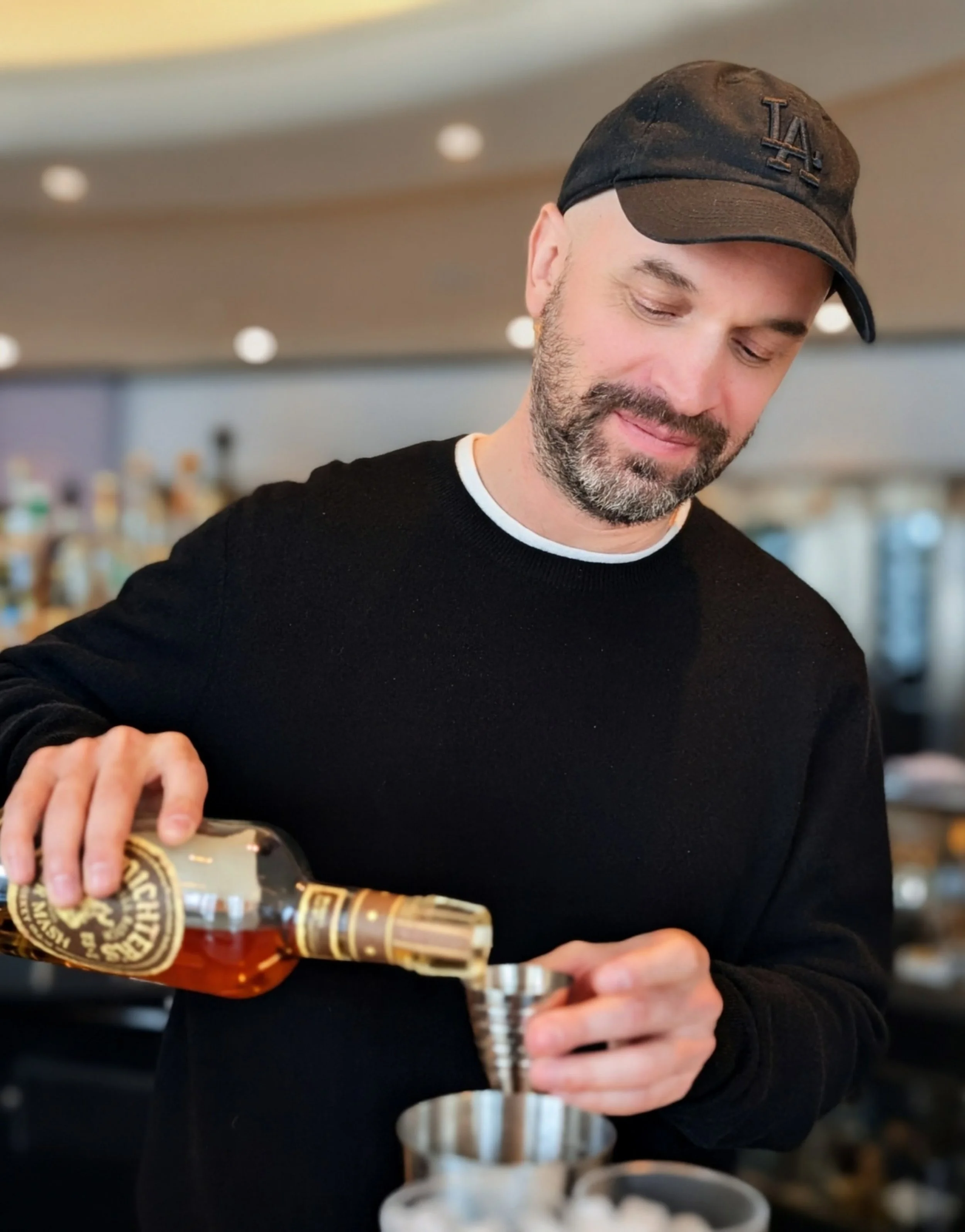
Andrew preparing a drink at Ile de France, the sister restaurant to Le French Line
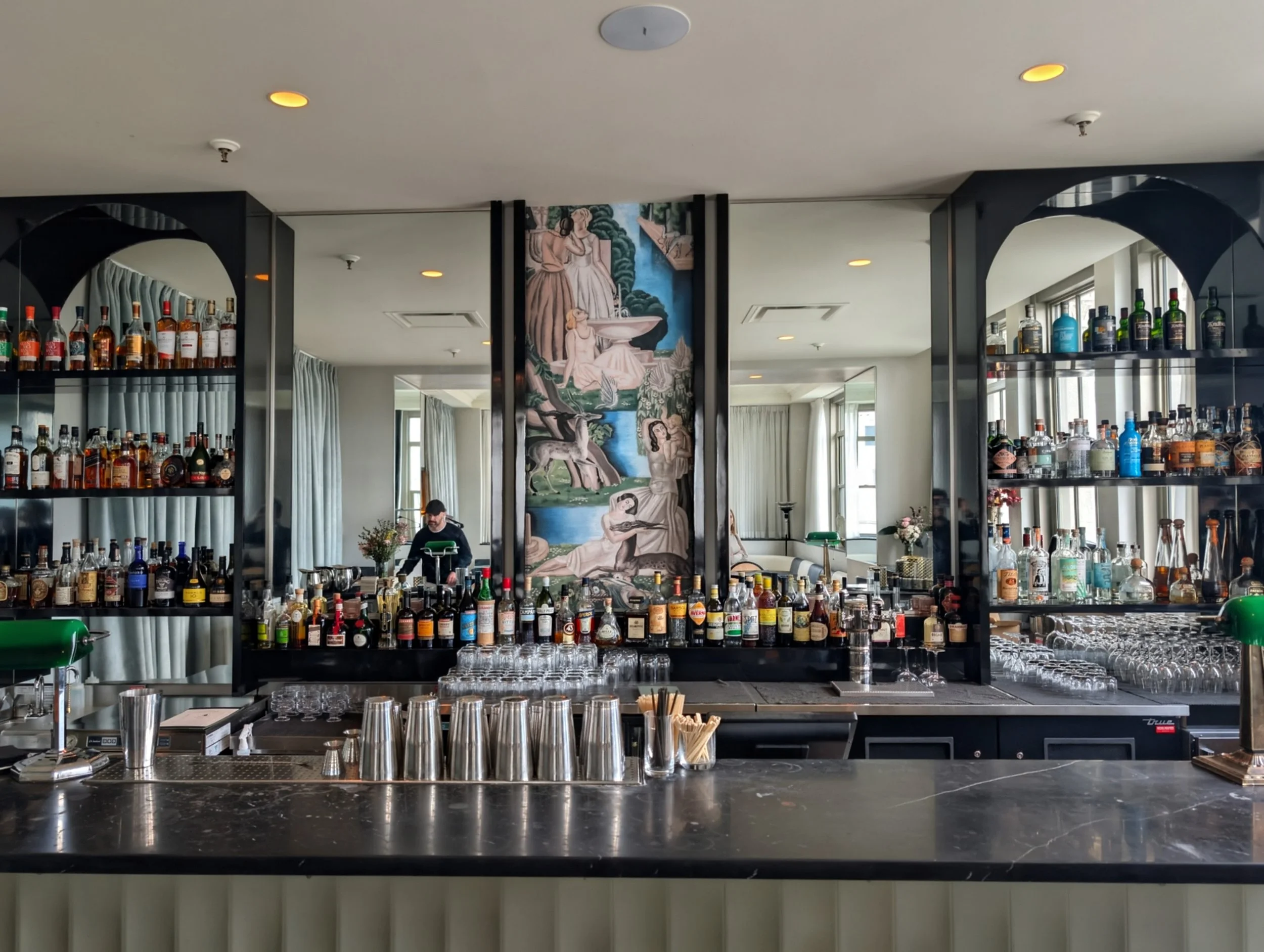
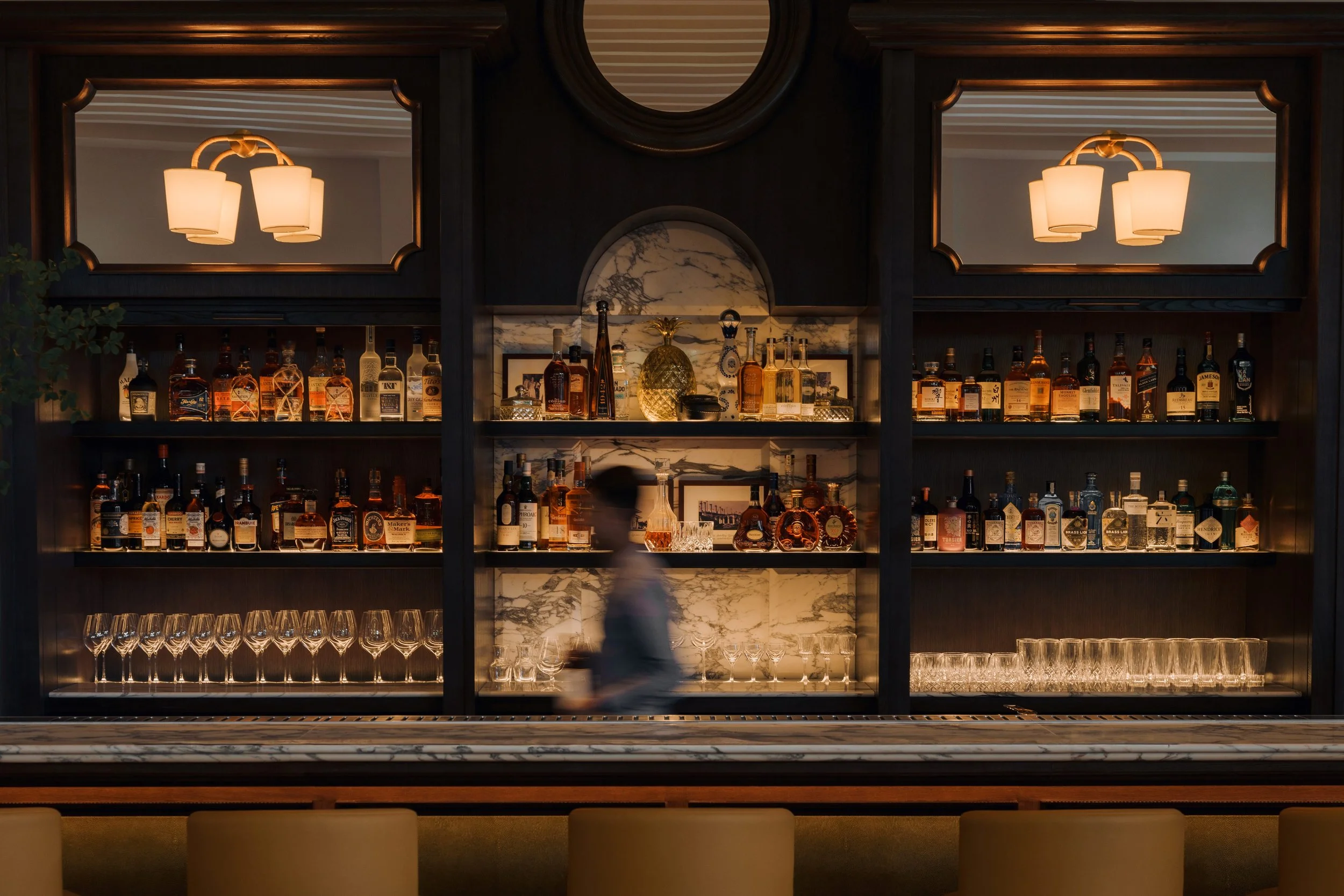
A daytime view of Le French Line Bar