
Il Martinista a Milano
Nel 2018, stanco degli eccessi di una mixology massimalista, ho sposato l’estetica dei Martinisti italiani: essenziale, pulita, priva di fronzoli. La mia ricetta è volutamente estrema: 20 parti di London Dry e una di vermouth, sigillata dagli oli essenziali del limone. Tecnicamente sbilanciato? Senza dubbio. Ma il Martini, per me, è un gesto prima che una formula: un fugace “momento Bond” che non appartiene a un luogo fisico, ma a uno stato d’animo.
David Wondrich lo ha definito meglio di chiunque altro: “un’invenzione più grande della vita… così nitida, pulita e letale che ti taglia la testa mentre le gambe continuano a camminare.” Che sia nato al Knickerbocker di New York nel 1912 o sia l'evoluzione del Martinez ottocentesco, nel 2025 resta il cocktail iconico per eccellenza.
Eppure, continuo a credere che la sua vera capitale non sia Londra né New York, ma Milano. Qui il Martini è cultura quotidiana: vive nelle storiche pasticcerie come Biffi, Marchesi, Ginrosa e San Carlo. Luoghi che scivolano con naturalezza dal cappuccino mattutino all’aperitivo serale, veri santuari per i Martinisti. La città custodisce anche pezzi di storia tangibile: il Nottingham Forest ospita il bancone originale del Knickerbocker, mentre l’Harp Pub Guinness serve il “Direct Martini” dal 1976.
Ecco i luoghi di culto del Martini milanese.
Biffi è il simbolo dell’eleganza milanese. Si beve solo in piedi, in un ambiente che è l’antitesi raffinata dell’Happy Hour moderno. Dalle 17 alle 19 il bancone in zinco si riempie di Martini perfettamente ghiacciati, mentre d’estate i tavolini esterni diventano il regno dei Martinisti.
Niente buffet: qui l’aperitivo è ancora un rituale vero, pensato per aprire lo stomaco, non per riempirlo. La casa serve un Tanqueray London Dry gelato, preparato “in and out” dal bartender Paolo Monopoli — il vermouth tocca appena il ghiaccio e scompare. La clientela è storica, ma sempre più giovani stanno riscoprendo questo stile. Gli insider — come Daniele Poggi e Francesco Pelagi di Direct Martini — ottengono anche una versione non diluita. Da mangiare, i classici: tartine all’acciuga minuscole e l’ormai leggendario uovo tonnato.
Come sintetizza Beppe Deregibus, habitué storico: “Il bancone del Biffi è il punto di ritrovo più fedele dei Martinisti milanesi. Il vero magnete è Paolo e il suo dry martini versato sempre fino all’orlo. È un luogo dove la costanza è tutto.”
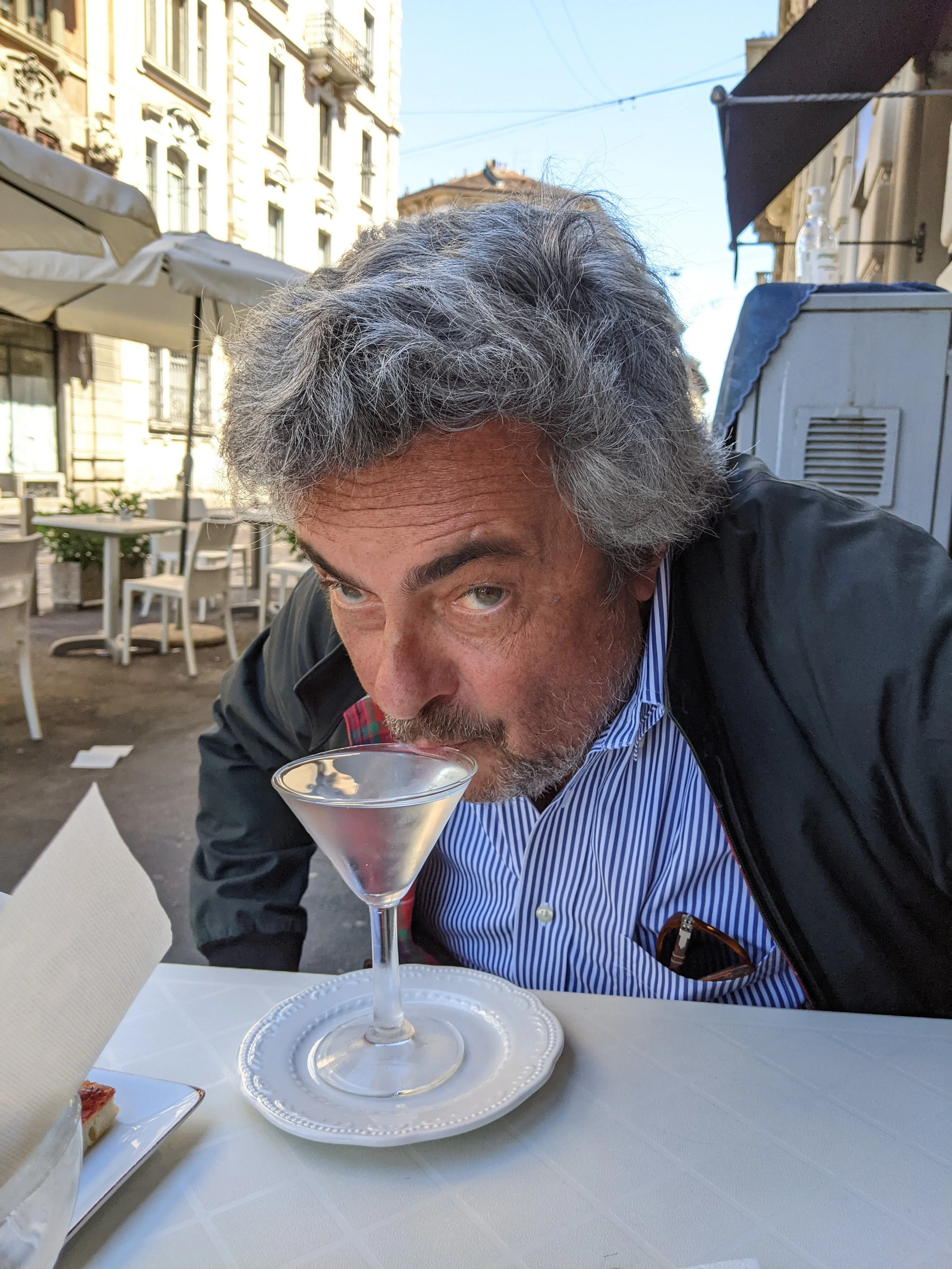
Beppe si gode il Martini da Biffi
Per i cultori del bere bene a Milano, il Direct Martini di Angelo Corbetta all’Harp Pub Guinness è più di un cocktail: è un’istituzione. Sebbene l'atmosfera richiami pinte di scura, gli iniziati sanno che qui si ordina un solo capolavoro: il Martini di Angelo. Un drink pulito, rigoroso e dalla beva straordinaria.
La filosofia di Angelo è scolpita nel tempo: “Il Martini deve essere ghiacciato, forte e diretto,” spiega. “Una poeisa da sorseggiare lentamente, lasciando che il calore della bocca sprigioni un’esplosione di aromi e colori. È un rito che si ripete identico dai primi anni '70.”
Tecnicamente, Angelo resta fedele al Tanqueray London Dry (43%), che considera ancora imbattibile nonostante i cambiamenti storici della gradazione, pur aprendosi recentemente a etichette come Vallombrosa (47%) e Farmer’s (48%). Il segreto è la temperatura: gin e bicchiere riposano in freezer, creando una texture densa, quasi cremosa. Il bicchiere viene appena 'sporcato' di Noilly Prat e profumato con gli oli essenziali di una scorza di limone che poi scompare.
Il fascino vero, però, risiede nel paradosso: gustare un Martini da grand hotel in un pub del 1976, tra legni scuri e studenti, trovando l'eleganza dove meno te l'aspetti.
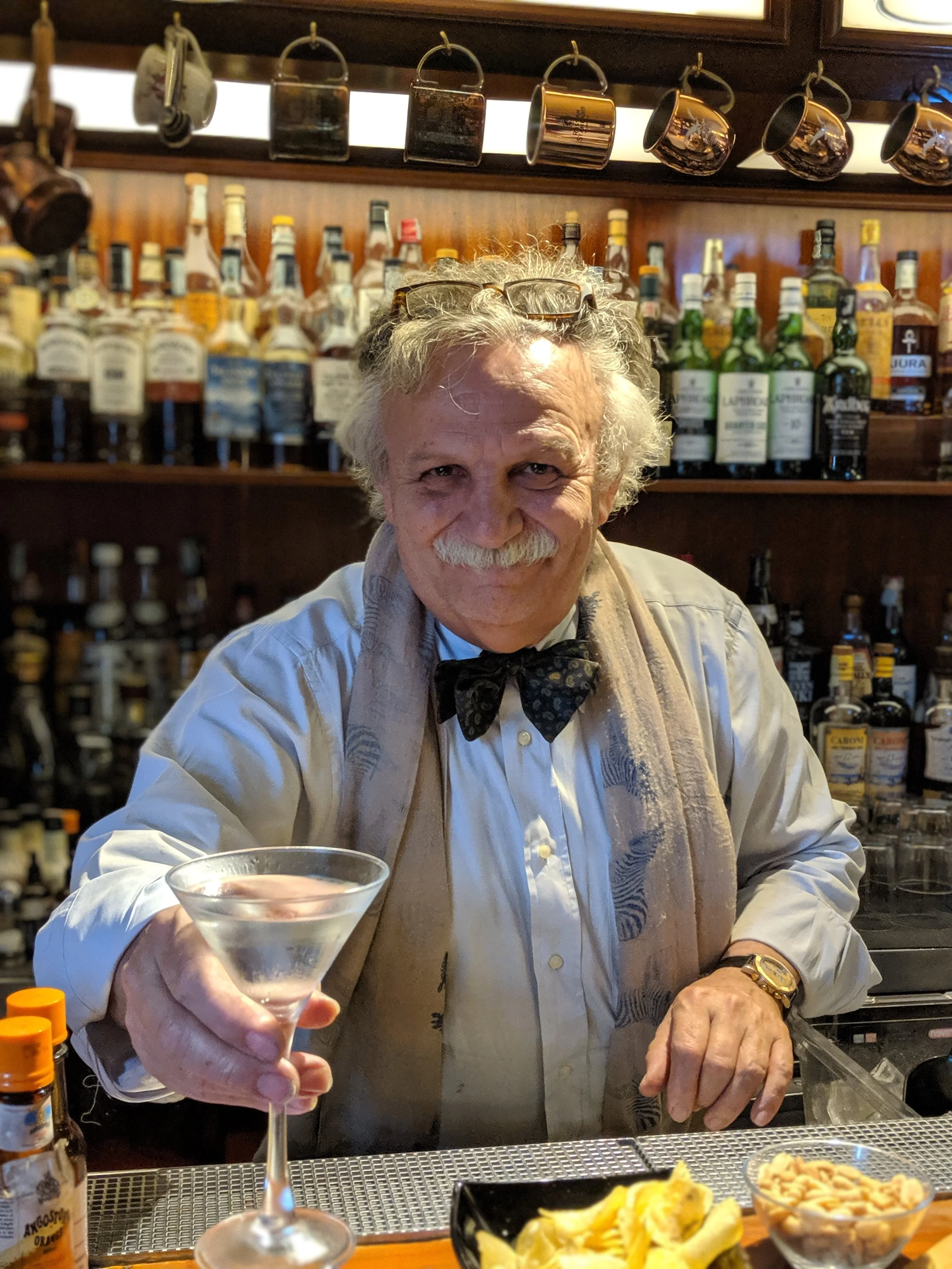
Angelo Corbetta con un Direct Martini
Al Nottingham Forest, i Martini-lovers formano un gruppo a sé. Se guardi oltre il décor da film d’avventura, li riconosci subito. Non sono qui per gli effetti speciali, ma per il bancone: una reliquia recuperata dal Knickerbocker Hotel di New York, il luogo dove — secondo una delle versioni — è nato il Martini nel 1912 per John D. Rockefeller.
Come al Biffi, i Martinisti sono milanesi impeccabili che trattano lo sgabello come una piccola navata. Mentre la fila fuori aspetta 45 minuti per le creazioni molecolari di Dario Comini, loro conoscono il ritmo giusto: arrivare all’apertura, alle 18 della domenica. Una routine che sembra quasi un rito. E mentre tutto attorno è un teatro di fumo e magia, loro sono il punto fermo.
Il Naked (Direct) Martini di Comini, fatto con I.gin.0 del locale, è la scelta più comune. Ma la forza del Martini sta nella sua natura camaleontica. “Ognuno ha un’idea diversa di perfezione,” spiega Dario. “Ogni Martini è unico.” Tra le sue creazioni, il Mondrian Martini: un omaggio al De Stijl, con capsule sferificate di Campari, vodka allo zafferano, assenzio e Pimm’s immerse in un martini cristallino.
Come riassume Daniele Poggi: “Il Nottingham Forest è l’essenza del Martini. Con le sue sfumature infinite e le sue sorprese, è una tappa obbligata. Ogni visita è un viaggio nel suo universo.”
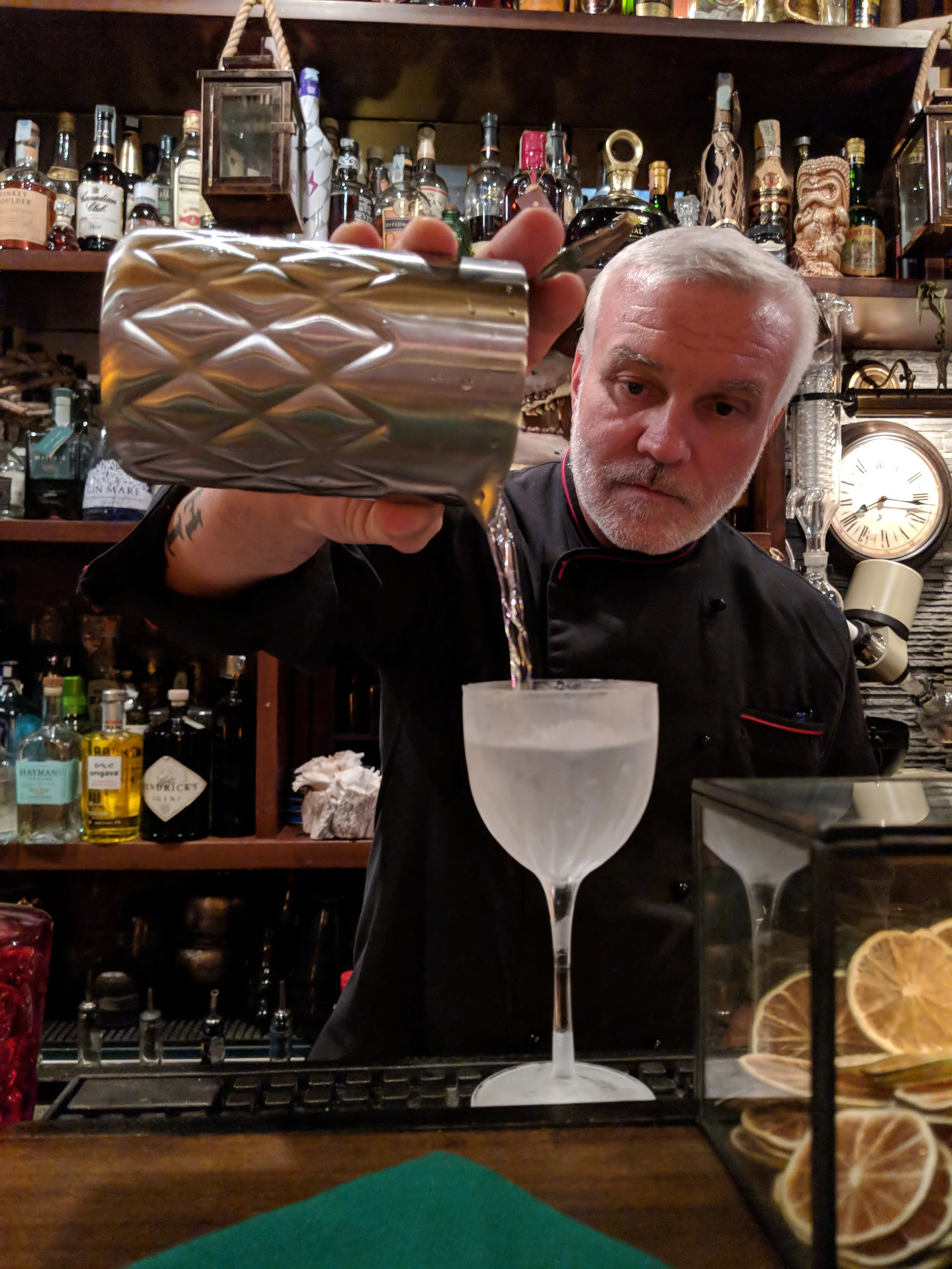
Dario Comini al Nottingham Forest
The Martinista in Milano
By 2018, seeking an antidote to the fatigue of maximalist mixology, I embraced the ethos of the Italian Martinisti: clean, crisp, and stripped of all frills. My personal specification is aggressive—a 20:1 ratio of London Dry to vermouth, finished with essential oils from a lemon. While technically unbalanced, this drink is less about the mechanics and more about the ritual; a fleeting "Bond moment" that transcends geography.
As David Wondrich famously observed, the Martini is "a larger-than-life invention... so sharp, clean, and deadly that it cuts the head off while the legs keep walking." Whether it was born at New York's Knickerbocker in 1912 or evolved from the 1860s Martinez, it remains the essential cocktail of 2025.
Yet, I maintain that the true capital of the Martini is neither London, with the Connaught’s theatrical service, nor New York, with its wetter vodka-based riffs—but Milano. Here, the culture is woven into the fabric of daily life, thriving in historic pasticcerie like Biffi, Marchesi, Ginrosa, and San Carlo. These venues shift effortlessly from morning espresso to evening aperitivo, acting as magnets for the dedicated Martinista. For the true believer, the city offers deep history: Nottingham Forest holds the original Knickerbocker bar top, while Harp Pub Guinness has been pouring the "Direct Martini" since 1976. Below I highlight a few of the Martinista’s favorite meeting points in Milano.
Pasticceria Biffi
Pasticceria Biffi stands as a fortress of Old Guard Milanese etiquette, offering a refined, standing-room-only experience that is the sophisticated antithesis of the modern, chaotic Happy Hour. Between 5 pm and 7 pm, the zinc counter becomes a sea of V-shaped glasses, confirming its status as the sanctuary for true Martinisti. Come summer, Martinisti claim the outdoor tables, sipping glasses filled precariously to the brim.
Biffi strictly rejects the heavy buffet trend in favor of a classic pre-dinner ritual designed to whet the appetite rather than spoil the meal. The house standard is a freezing, textbook Tanqueray London Dry prepared "in and out" (vermouth is used only to rinse the ice) by experienced bartender Paolo Monopoli. While the demographic leans toward distinguished older gentlemen, a younger crowd is discovering this tradition, with insiders—like Daniele Poggi and Francesco Pelagi of Direct Martini—even securing a special non-diluted pour upon request. To accompany the Martini, expect Biffi’s renowned savory pastries, specifically the tiny anchovy tartines and the coveted uovo tonnato (hard-boiled egg with tuna sauce).
The allure of Biffi is perhaps best articulated by loyal patron Beppe Deregibus: “The bar at Biffi boasts the city's most devoted gathering of Martinisti. Here, the draw is bartender Paolo and his perfectly executed in and out dry Martini, poured to the very top of the glass. It is a place of rare consistency, where many faces in the crowd have been daily clients for an entire lifetime.”
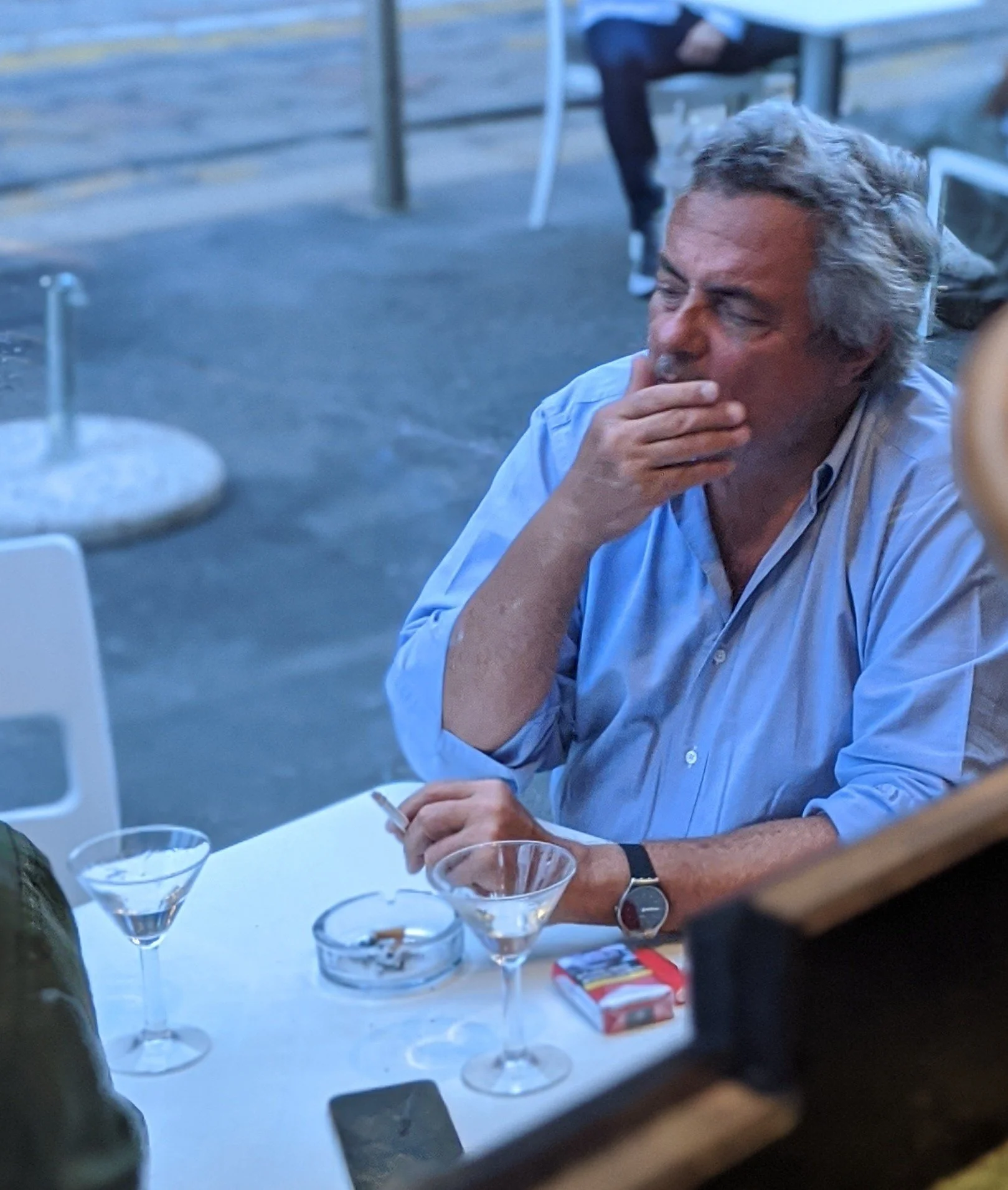
An afternoon Martini with Beppe at Biffi
Harp Pub Guinness
Based on the local lore of the Martinisti in Milano, the Direct Martini served by Angelo Corbetta at Harp Pub Guinness is a cult classic that defies the venue's Irish pub exterior. While most expect a pint of stout, those in the know ask "The Boss" (Angelo) for his martini, which is unpretentious, technically precise, and dangerously drinkable.
Accoring to Angelo, “The perfect Martini must be glacial, potent, and straightforward. It demands to be sipped slowly, resting on the palate just long enough for the bouquet to burst open, delivering a spectrum of fantastic sensations. This is the precise ritual we have maintained since the early 1970s.”
Angelo is an unapologetic loyalist to Tanqueray London Dry (43%), famously stating in interviews that "despite the drop in ABV over the years, it remains the best gin on the market." However, in recent years, Angelo has begun to take a liking to Vallombrosa (47%) and Farmer’s (48%). In true Milanese "Direct" style, both the gin and the classic V-shaped glass are kept in the deep freeze. The gin is poured thick and syrupy, directly from the freezer to the glass. A whisper of Noilly dry vermouth is used to coat the frozen glassware before pouring the icecold gin, leaving only the aromatic memory of the fortified wine. As a garnish, a lemon peel is expressed over the surface to release the oils (but then discarded), adding a bright citrus nose to cut through the cold juniper.
What makes this Martini iconic is the setting. You are drinking a world-class, sophisticated cocktail in a historic 1976 pub filled with dark wood, brass taps, and university students, served by one of the classiest gentleman in Milano. It is an unexpected moment of elegance in a casual setting.
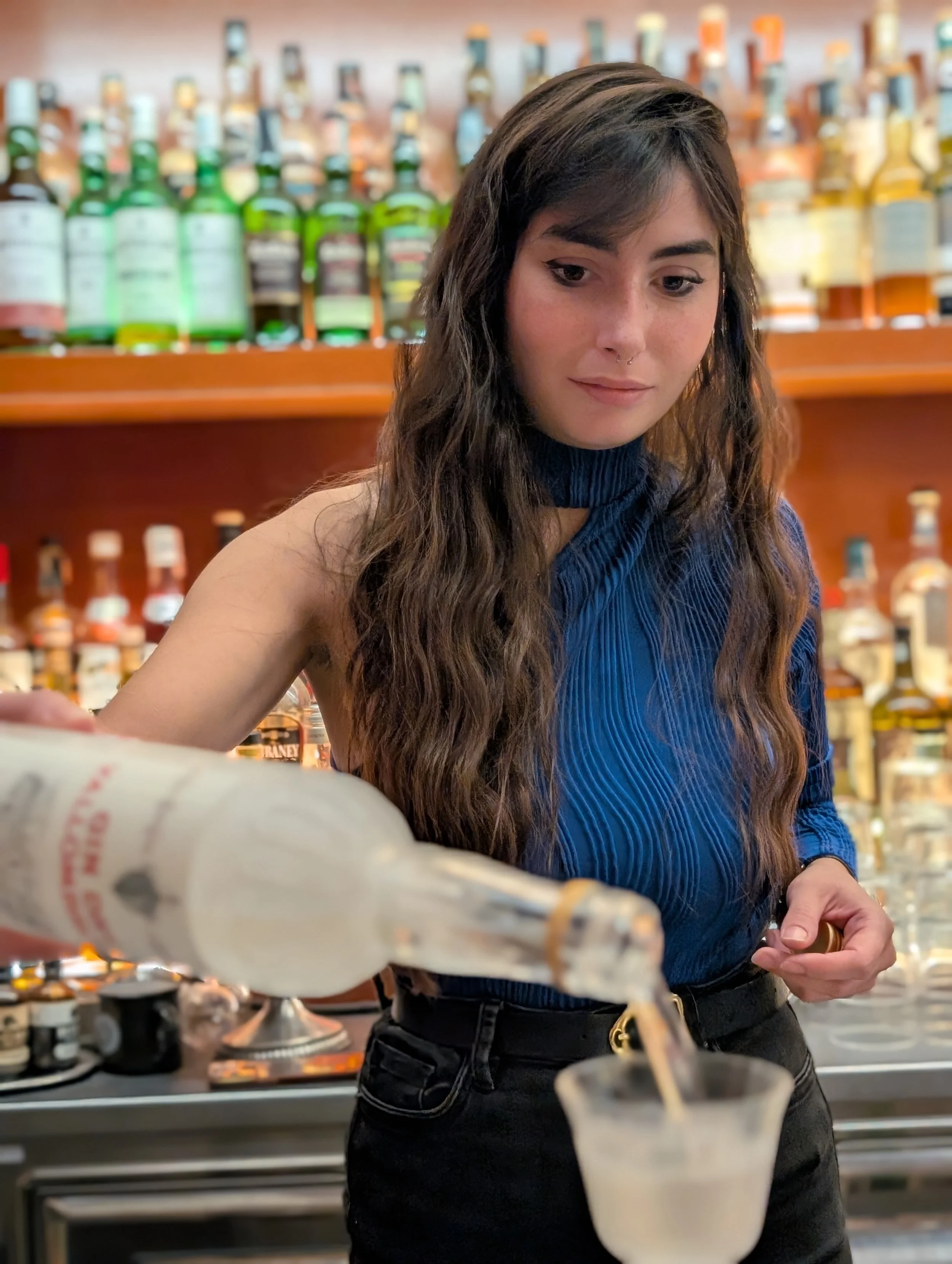
Ylenia “Fragola” prepara un Direct Martini al Pub
Nottingham Forest
At Nottingham Forest, the Martini drinkers are a distinct tribe. If you look past the Indiana Jones’ attic décor, you will spot them. These sophisticated patrons aren't here for smoking guns or evocative garnishes; they are here for the wood their elbows rest upon. They know the bar counter itself is a holy relic—salvaged from the Knickerbocker Hotel in New York, the very place where the martini was rumored to be invented in 1912 for John D. Rockefeller.
Much like at Biffi, the Martinisti of Nottingham Forest are often well-dressed Milanese who treat the barstool like a church pew. While the line outside is full of tourists waiting 45 minutes to witness owner Dario Comini's molecular magic, the veteran Martini drinker knows the rhythm. They arrive right at opening—6 PM on Sundays—making this tradition akin to evening mass. While the rest of the bar is a frenzied theater of smoke and mirrors, these drinkers are the calm eye of the storm, quietly worshipping at the most important slab of wood in cocktail history.
Martinisti here often order Dario’s Naked (Direct) Martini made with Nottingham Forest’s own I.gin.0, but the beauty of this classic is its versatility. "We all have different tastes and ideas of what makes the perfect Martini," Comini explains. "Each Martini is individual and unique." One such variation is his signature Mondrian Martini—a molecular tribute to De Stijl art featuring a clear dry martini base housing spherified liquid capsules of red Campari, yellow saffron vodka, green absinthe, and dark Pimm’s.
As regular customer and Martinista Daniele Poggi explains, "Nottingham Forest is the very essence of the Martini. With its infinite nuances and unexpected combinations, it's an essential destination...Every visit is a true journey into its most surprising universe."

The author patiently awaiting the opening of Nottingham Forest