Tokyo
Tokyo’s cocktail scene tells a story of cultural exchange, refinement, and mastery. What began as a Western curiosity evolved into an internationally celebrated craft, epitomized by the meticulous “Ginza Style.”
The story begins in the Meiji era (1868–1912), when expanding foreign relations and trade introduced Western spirits to Japan. Initially, cocktails were confined to refined hotel bars such as the Imperial Hotel, catering primarily to international guests. This changed in 1880 with the opening of Kamiya Bar in Asakusa. Founded by Denbei Kamiya, it became Japan’s first Western-style drinking establishment and gained national fame for Denki Bran (“Electric Brandy”), a potent blend of brandy, gin, wine, and botanicals.
While elements of café culture existed before the war, the true transformation of Japan’s drinking culture occurred during the post–World War II American occupation (1945–1960s). The presence of American servicemen generated demand for bourbon, gin, and soda, accelerating the rise of informal Torys Bars and jazz kissa. Drinking culture moved beyond elite hotel spaces into neighborhood bars, embedding itself into the everyday life of a nation in reconstruction.
By the 1990s economic boom, Tokyo bartending had crystallized into a refined art form, particularly within the affluent Ginza district. Establishments such as Mori Bar and Tender Bar (both founded in 1997) came to define this era. Tokyo’s approach distinguished itself from Western practices through the philosophy of shokunin—the pursuit of mastery through lifelong dedication. Bartending became a disciplined craft shaped by traditional apprenticeship. Masters like Kazuo Uyeda introduced techniques such as the “Hard Shake,” a precise method designed to aerate and chill cocktails while achieving ideal dilution. At the same time, sculptural ice carving emerged as an essential expression of omotenashi, Japan’s intuitive and anticipatory hospitality.
Tokyo's cocktail culture has evolved dramatically since the late 2000s. A younger wave of bartenders now blends international inspiration and gastronomic creativity with Japan's time-honored techniques. Bartenders like Hiroyasu Kayama at Bar Benfiddich (opened 2013) lead this evolution, growing his own botanicals and drawing from apothecary traditions. Modern Tokyo bars tend toward relaxed settings rather than formal rituals, incorporating ingredients such as dashi, matcha, and native citrus. Still, the distinctly Japanese essence persists—defined by meticulous precision and relentless dedication to perfection, with the guest always being the protagonist.
Below, we explore six venues that embody this contemporary cocktail movement: Bar Qwang, Bar Trench, Bulgari Ginza Bar, Virtù, Bulgari Hotel Tokyo, and The Punch Room.
Bar Qwang
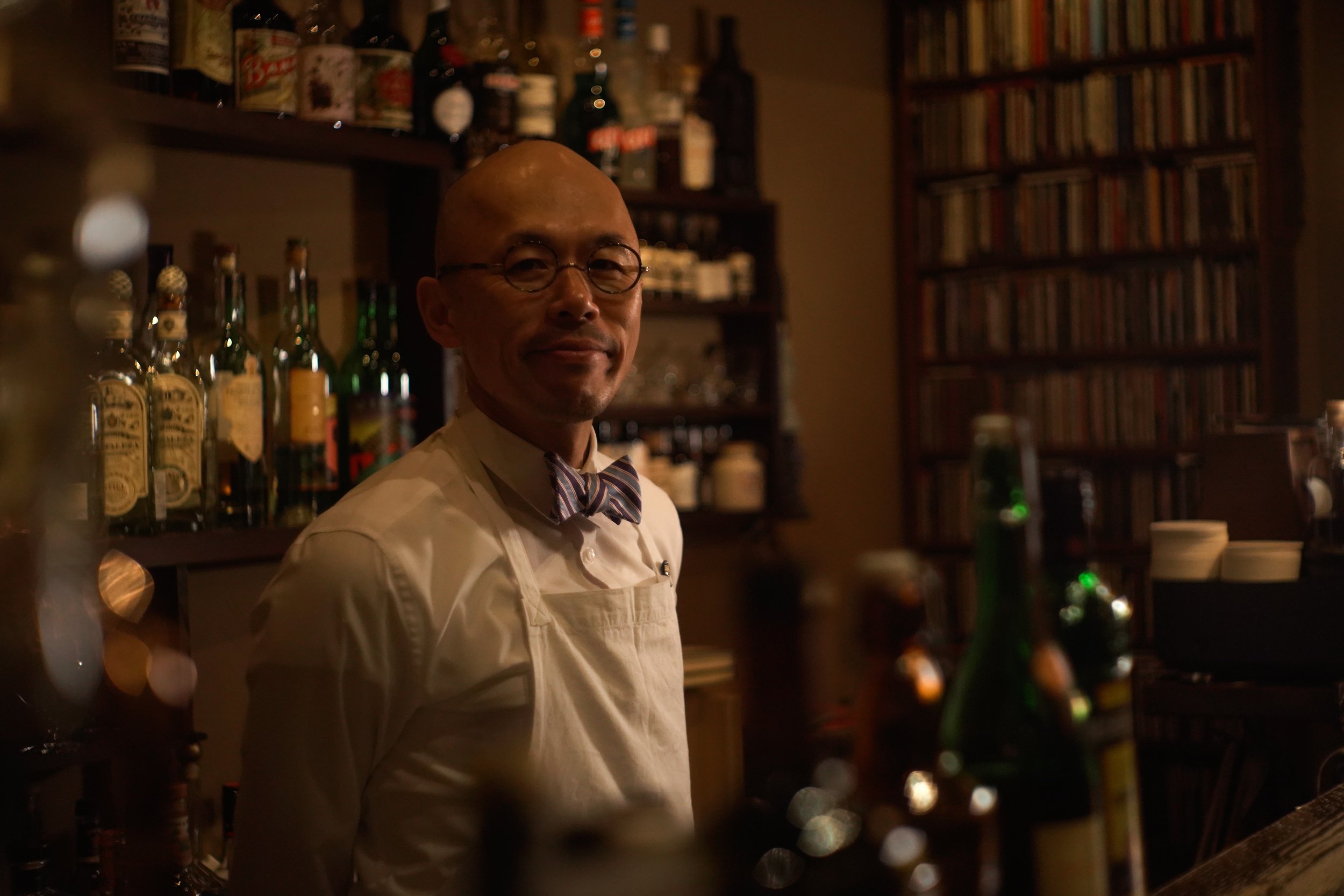
Yasuhiro Hasegawa of Bar Qwang
The bar with the most storied history in this article is Bar Qwang, which first opened its doors on 8 December 2000. Tucked away in a Nishi-Azabu basement just west of Ginza, Bar Qwang is a welcome outlier in Tokyo’s world of hyper-specialization—a hidden living room where Silk Road flavors meet jazz-age looseness.
Descending from the street, guests enter a warmly dim space defined by dark wood counters, shelves of vinyl records, and a soundtrack of 1960s jazz. The mood is relaxed and communal, a deliberate contrast to the hushed reverence of traditional Japanese bars.
With 25 years of history, Qwang combines welcoming service with a drink menu that ranges from expert classics to creative non-alcoholic pours. At its heart are husband-and-wife team Yasuhiro and Junko Hasegawa. Yasuhiro runs the bar with easygoing charm, while Junko commands the kitchen with vibrant Thai dishes. Together, they offer hospitality that feels less like service and more like being welcomed into a friend’s home.
While Ginza bars are famous for their library-like silence where you can hear the ice clinking. Bar Qwang has a vibe that shifts from somber to rock. The owner, Yasuhiro Hasegawa, is a music fan who spins Leonard Cohen or Tom Waits. While in Ginza, you go to watch the bartender work in silence. At Qwang, you go to hang out, talk to the husband-and-wife owners, and relax.
Though Yasuhiro excels at classics such as the Paloma and Alaska, his Ramos Gin Fizz stands as the showpiece of his craft. Created as a tribute to legendary bartender Erik Lorincz—and shaken for precisely 60 seconds using a Lorincz-designed Birdy shaker—this drink exemplifies exacting technique.
Yasuhiro's Ramos Gin Fizz combines 50 ml Bombay Sapphire Gin, 15 ml lemon juice, 10 ml lime juice, 25 ml simple syrup, 30 ml double cream (35%), and 1 egg white, shaken and strained into a chilled 10 oz Collins glass, then finished with 70 ml club soda and a splash of orange flower water. The distinctive foam cap rises gracefully above the glass rim with refined restraint rather than excess. This lush, fragrant drink offers welcome refreshment alongside the kitchen's fiery green curry or spiced minced pork salad.
Yasuhiro Hasegawa, Founder, Bar Qwang
“Qwang is our personal invitation to experience a different rhythm in Tokyo. We are deeply proud to pour expertly crafted classics and botanical infusions, paired with our honest, additive-free approach to traditional Thai and seasonal Asian dishes."
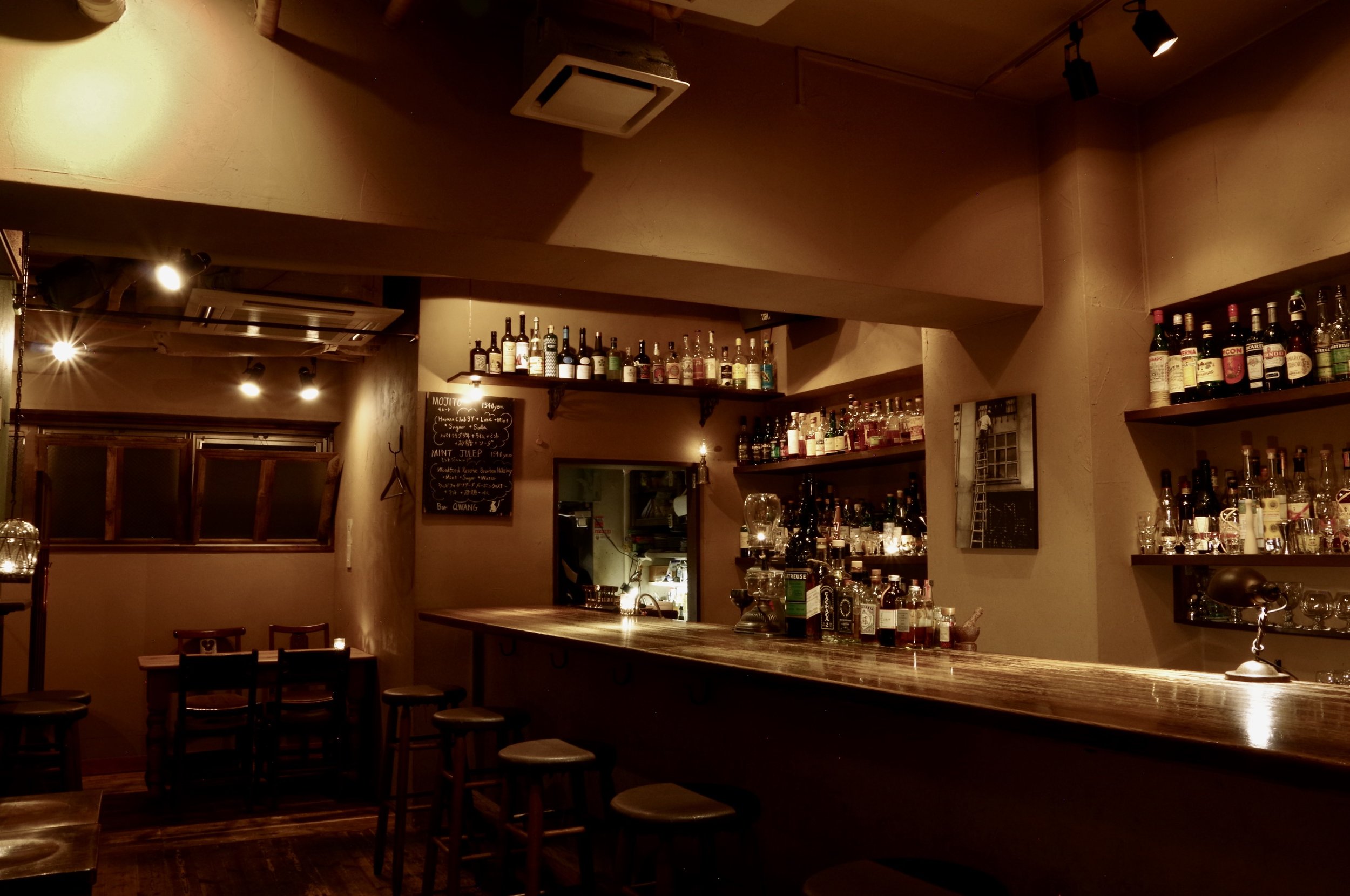
Bar Qwang
Bar Trench
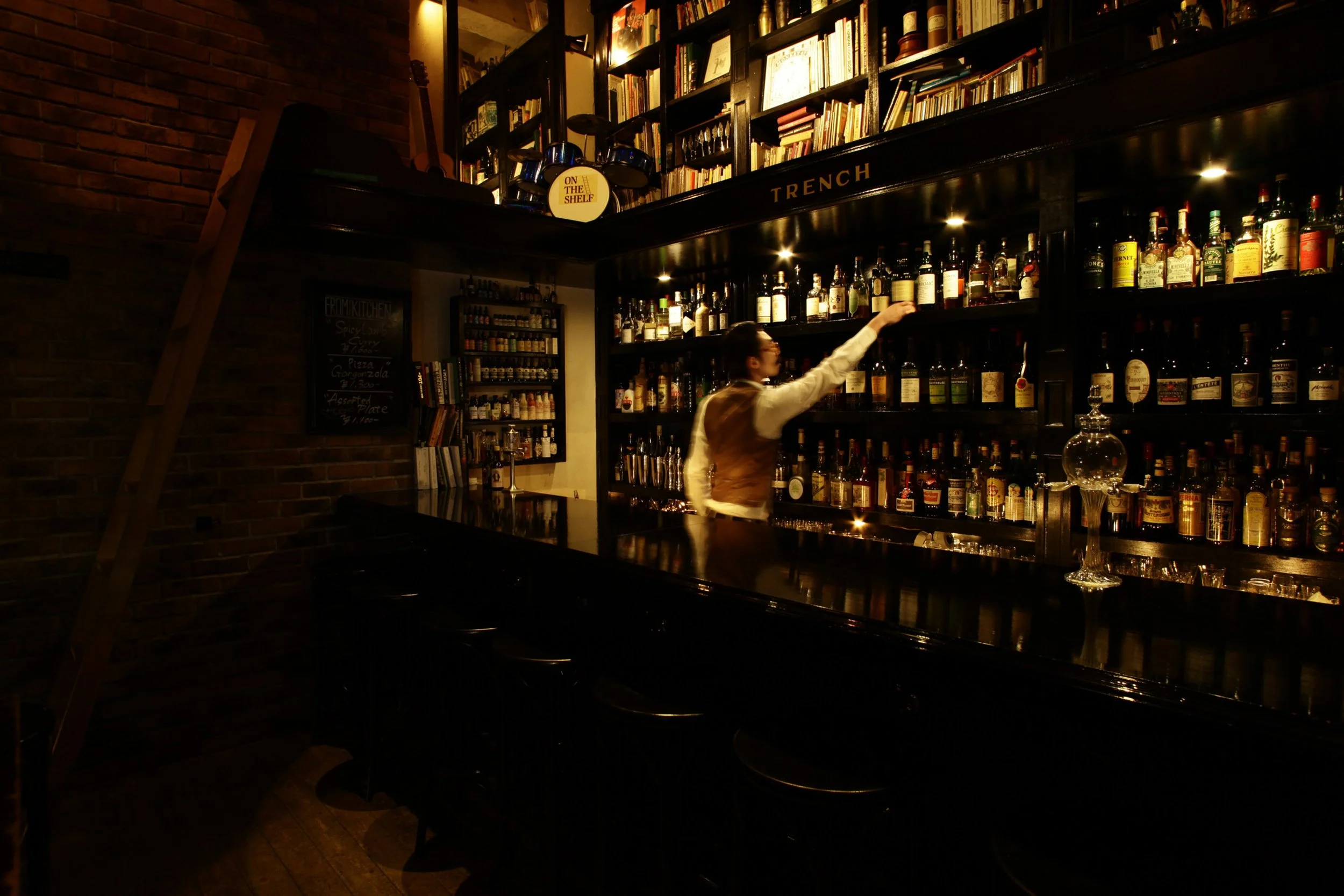
Bar Trench
Established in 2010, Bar Trench helped usher in Tokyo's contemporary cocktail movement. Hidden along a peaceful Ebisu side street, passing through its substantial wooden entrance feels like entering the personal library of a Victorian-era naturalist.
Where Ginza is recognized for its ceremonial, traditional approach, Bar Trench cultivates a more easygoing, clandestine atmosphere reflective of the Ebisu/Daikanyama neighborhood. The aesthetic draws heavily from 19th-century European absinthe salons.
With seating for just 13, the venue exudes closeness and textured ambiance. Darkened timber shelving rises toward the ceiling, vintage ladders lean against softly illuminated bottles, and the decor bridges European pharmacy and 1920s underground bar.
Behind the bar stands Rogerio Igarashi Vaz, a Brazilian-Japanese bartender and one of Tokyo's most beloved figures. Always dressed elegantly, Rogerio fuses exacting Japanese craftsmanship with the generosity and animation of Latin American hospitality.
Bar Trench has emerged as Tokyo's de facto sanctuary for absinthe and amari, boasting one of Japan's most extensive herbal liqueur collections. Absinthe is prepared in the authentic manner, utilizing fountain and sugar cube—a ceremony seldom encountered in Japan. In the traditional absinthe ritual, cold water gently drips over a sugar cube, producing a cloudy louche and releasing the spirit's complex botanical notes. Beyond this time-honored presentation, Rogerio reinvents classic recipes from the 1930 Savoy Cocktail Book for contemporary palates, including the Modern Cocktail No. 2 and the McClelland. The program also showcases brighter, more approachable signatures like the Absinthe Sonic—combining tonic, soda, and lime—and an Absinthe Mojito, repositioning absinthe as a flexible cocktail component rather than simply a potent curiosity.
The main cocktail menu features creative reimaginings of traditional drinks. The Trench 75 swaps champagne for sparkling sake, pairing Nikka Coffey Gin with honey to achieve a strikingly crisp profile. The drink is prepared by shaking 30ml Nikka Coffey Gin, 10ml 1:1 honey syrup, and 15ml lemon juice, then straining into a coupe and topping with 30ml Dassai Nigori Sparkling Sake 45, garnished with a dried lime wheel. During colder seasons, the Bobby Banane delivers a more robust, whisky-driven variation on the Manhattan, incorporating Chivas Regal Mizunara 12-year-old, sweet vermouth, crème de banane, and chocolate bitters.
Rogerio Igarashi Vaz, Founder, Bar Trench
“Crafting the actual drink is only a small fraction of a bartender's role; the true essence of the craft is hospitality. No matter how exquisite a cocktail may be, a bar is ultimately defined by the comfort and warmth it extends to its guests."
Bulgari Ginza Bar
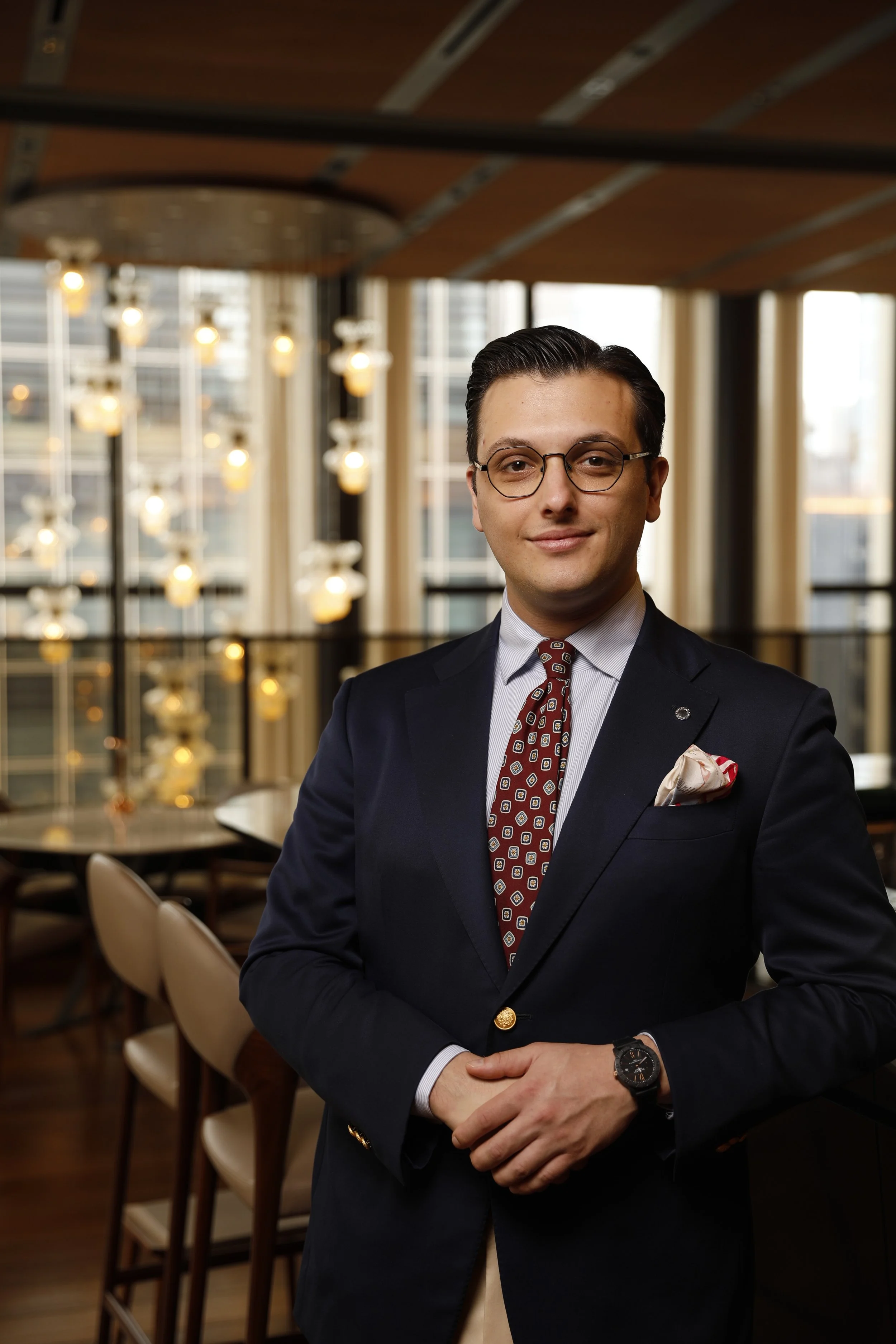
Simone Ciambrone at Bulgari Ginza Tower
Located on the 10th floor of the Bulgari Ginza Tower, Bulgari Ginza Bar provides a peaceful retreat where Italian sophistication merges with the meticulous artistry of Japanese hospitality. While the Bvlgari Ginza Tower has stood since 2017, Bulgari Ginza Bar underwent a renovation in June 2025. The interior stages a delicate conversation between dual heritages: soaring nine-meter ceilings and sweeping windows frame views of Ginza's cityscape, while a radiant Murano chandelier grounds the space in unmistakably Italian refinement.
Under the direction of bar manager Simone Ciambrone, the cocktail offering transcends traditional menu formats, presenting instead as a carefully curated anthology. Each drink functions as a liquid expression of Bvlgari's design principles, drawing inspiration from celebrated Italian cinema and cultural icons.
A standout example is the Santi Bailor, paying tribute to Alberto Sordi's character in Un Americano a Roma. This creation revisits the classic Americano through a nostalgic filter—the beloved Peanut Butter and Jelly sandwich translated into cocktail form. It marries Campari, Cocchi Americano, and strawberry with a surprising, evocative accent of redistilled peanut butter.
To create the Santi Bailor, begin by preparing a strawberry puree: blitz strawberries, mix 1:1 with caster sugar, and cook sous vide at 60°C for 3 hours. Freeze the compound for 12 hours, then strain through a coffee filter. Next, create the peanut butter soda using a rotary evaporator (50g peanut butter and 1-liter hot water at 42 mbar, 200 rpm, and 50°C). Carbonate the mixture using a Twist ’n Sparkle. Mix 40ml Campari, 20ml Cocchi Americano, 15ml of the strawberry liquid, and 30ml of the peanut butter soda. Pour 80ml of the prebatched cocktail over a large clear ice cube in a rock glass. Garnish sustainably using the leftover strawberry pulp and the peanut butter solids from the distillation.
Simone Ciambrone, Bar Manager, Bulgari Ginza Bar
"To me, a cocktail is like a good story—it needs a distinct beginning, middle, and end. I experiment until those three elements perfectly capture the narrative I want to share.”
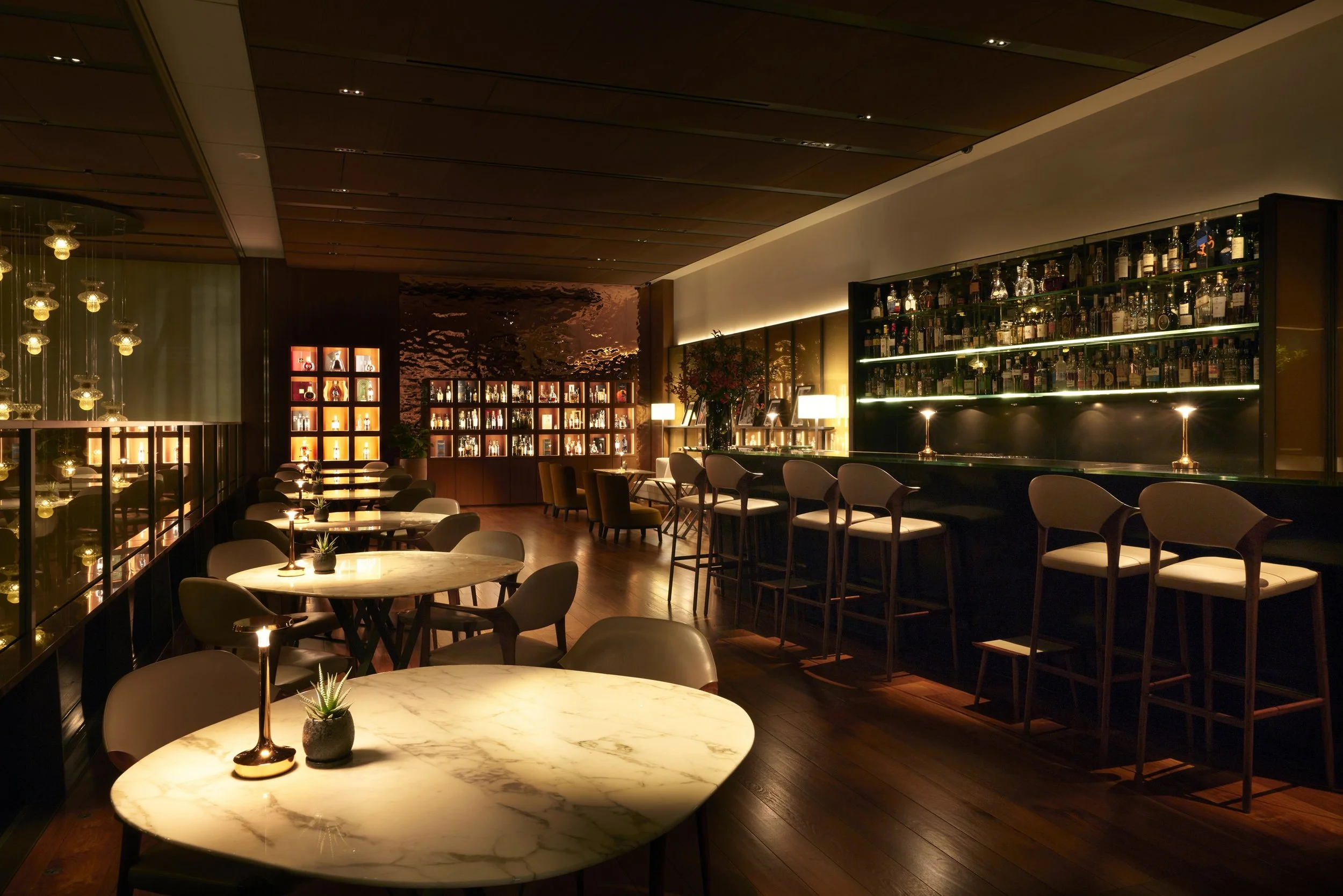
Bulgari Ginza Bar
Virtù at Four Seasons Otemachi
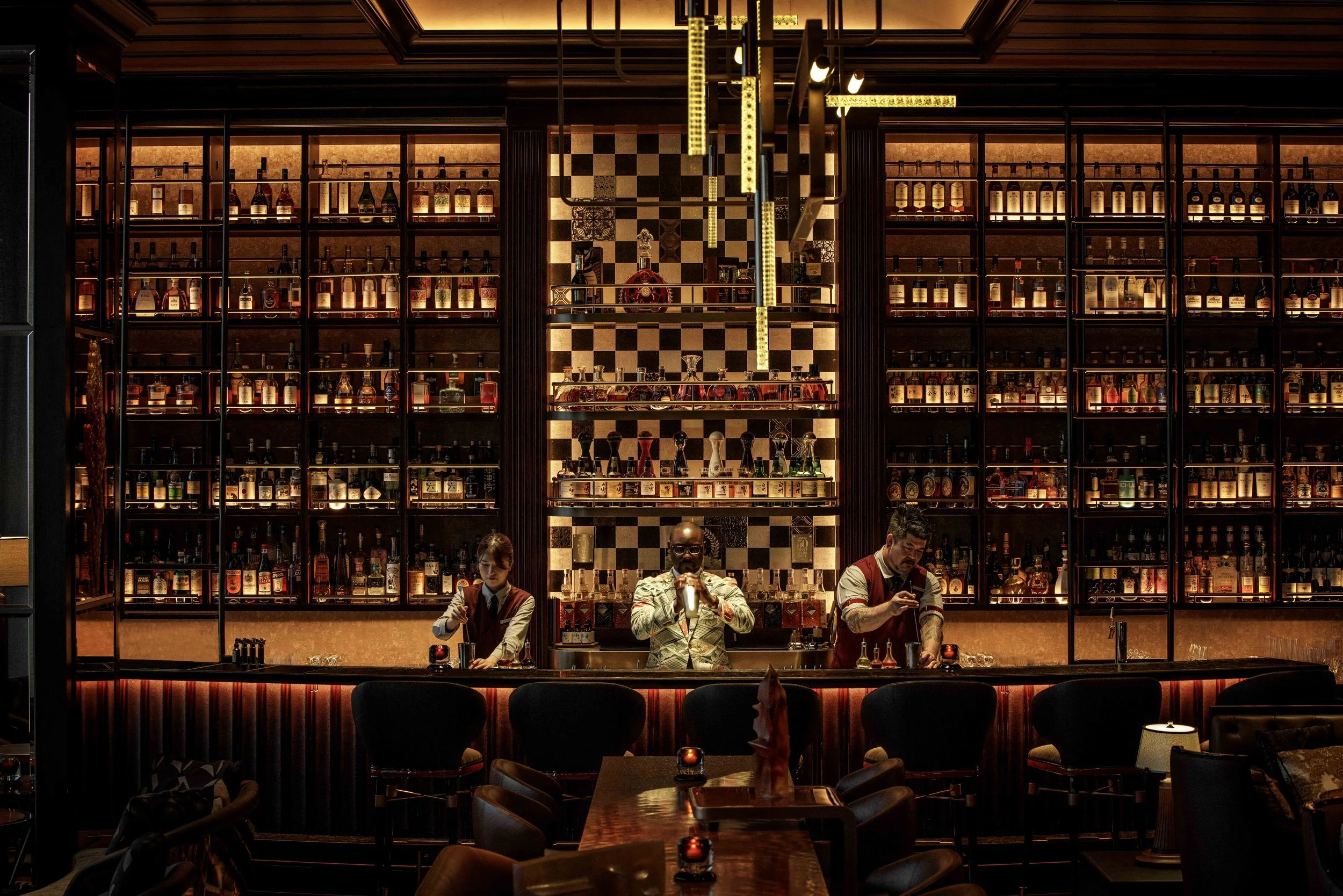
Sakura Ishii, Keith Motsi and Graham Kimura at Virtù
The corridor approaching Virtù on the 39th floor of the Four Seasons Otemachi, which debuted in 2020, feels like stepping across eras. Concealed behind a bookcase-style doorway, the bar reveals a radiant Art Deco haven where 1920s Parisian elegance meets contemporary Tokyo refinement. Elevated ceilings offer vistas of Tokyo Skytree, while the interior features crimson velvet seating and warm brass accents that conjure a seductive, intimate mood.
Leading the bar is Head Bartender Keith Motsi, its unmistakable driving force. Recognized for breaking down the formality typical of upscale hotel bars, Motsi delivers a warm, welcoming presence that secured Virtù the Michter's Art of Hospitality Award. "We're in the business of feelings," he notes—and his approach is meticulous yet accessible, converting newcomers into devoted patrons within moments.
The drink selection reflects Virtù's Franco-Japanese identity. The signature Smoked Ume Old Fashioned replaces sugar with house-made brandy umeshu, enhanced by hinoki bitters and dramatic smoke presentation, while the Virtù Martini combines Japanese white spirits with French dry vermouth. To prepare the Virtù Martini, mix 40ml Suntory Roku Gin, 10ml Haku Vodka, 5ml Lillet Blanc, 5ml Dolin Dry, 10ml Hokkaido mineral water, and 3 dashes of hinoki bitters, then store at -10°C in the freezer. Pour directly into a coupette tableside, garnished with a lemon twist, olive, and beetroot-soaked cocktail onion on a pick.
Keith Mosti, Head Bartender, Virtù
“At Virtù, our goal is to be a destination that truly embodies the spirit of a home away from home for both our team and our guests.”
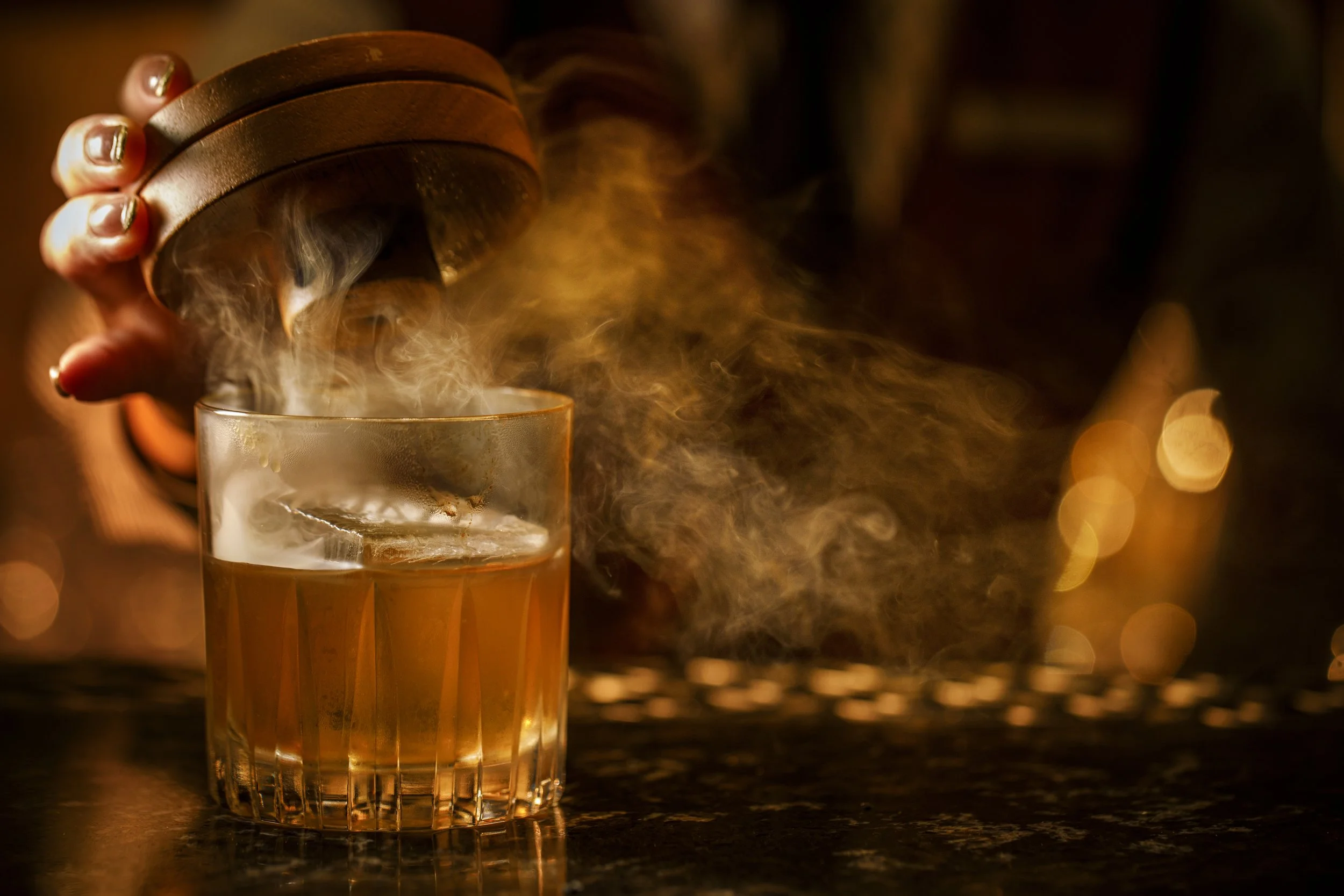
Smoked Ume Old Fashioned at Virtù
Bulgari Hotel Tokyo
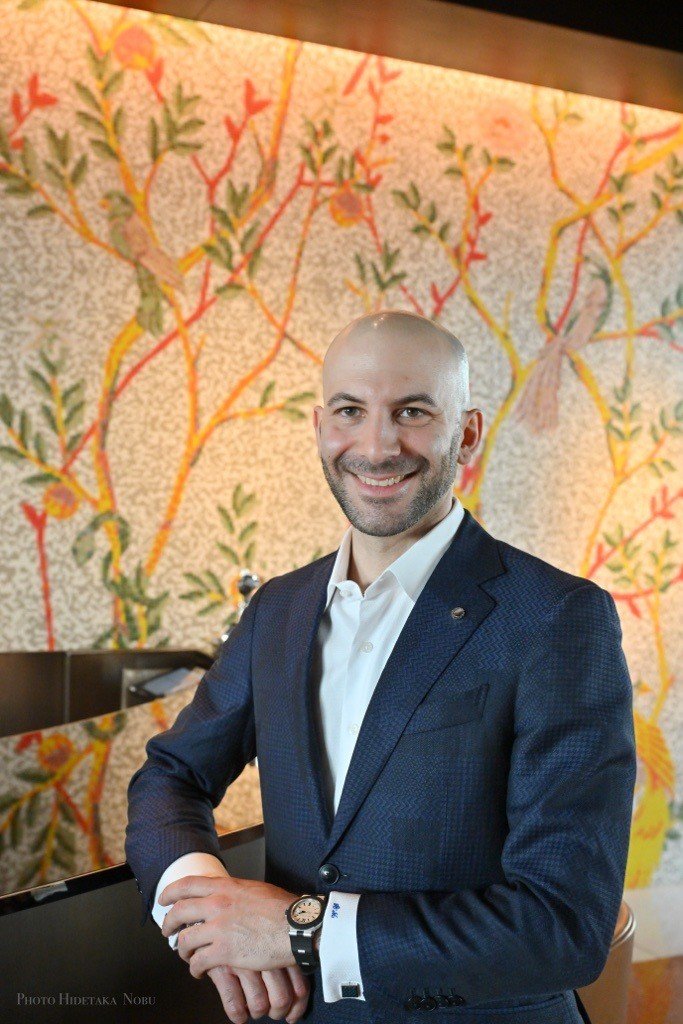
Andrea Minarelli of Bulgari Hotel Tokyo
The journey to the 45th floor of Bulgari Hotel Tokyo, which opened in 2023, carries an almost magical quality. Departing the electric glow of Tokyo Station, visitors step into an Italian reverie suspended 200 meters above ground at The Bulgari Bar—the lively centerpiece of the brand's latest Tokyo residence in Midtown Yaesu.
Conceived as a Giardino delle Meraviglie ("Garden of Wonders"), the interior revolves around a handmade Bisazza mosaic depicting mythical birds and botanical motifs. A sculptural black resin bar sits upon striking Venetian terrazzo, a traditional flooring method once featured in palazzos along the lagoon. Beyond the windows, generous terraces planted with lemon and yuzu trees move gently against the urban horizon, creating an almost dreamlike juxtaposition of Mediterranean citrus and distant Mount Fuji.
Bar Manager Andrea Minarelli, hailing from Ferrara, draws on experience spanning Italy and Hong Kong. His style merges relaxed Italian hospitality with rigorous Japanese precision. "We wanted it to feel like a pavilion in an ancient Italian garden," he describes, while developing a decidedly contemporary program centered on distinctive Japanese ingredients.
The cocktails here communicate fluently in both Roman and Tokyo vocabularies, perhaps best illustrated by the Night Jewel. A reinterpretation of the Kaikan Fizz and New York Sour, this drink weaves together Daiyame Shochu, Amethyst wine, Acqua di Cedro, lime, egg white, and milk into a multi-dimensional, visually striking composition.
To prepare the Night Jewel, combine 50ml Daiyame Shochu, 30ml Acqua di Cedro, 15ml lime juice, 10ml of 2:1 sugar syrup, 10ml fresh whole milk, and 10ml egg white in a shaker. Dry shake using a hand blender, then add 8 ice cubes and shake for 30 seconds. Double strain into an Ichendorf tall glass and top with 30ml of soda.
The visual drama requires patience: allow the mixture to stabilize for 40 seconds. Once separated, use a barspoon to slowly float 20ml of the custom Amethyst Wine (a blend of 600ml Kinobi gin and 100ml Chianti Classico, infused for one hour with 30g dried butterfly pea flower and 15g dried hibiscus, then slow-cooked at 70°C for 30 minutes). The result is a refreshing, floral experience where the smoothness of sweet potato Shochu meets fruity cedar and a creamy mouthfeel, capped by a stunning, complex amethyst layer.
Andrea Minarelli, Bar Manager, Bulgari Bar
“Bulgari Bar Tokyo is the meeting of Italian elegance and Japanese precision, with a deep connection to the territory, spirits, and local culture. At the center of every cocktail is always the guest and their experience.”
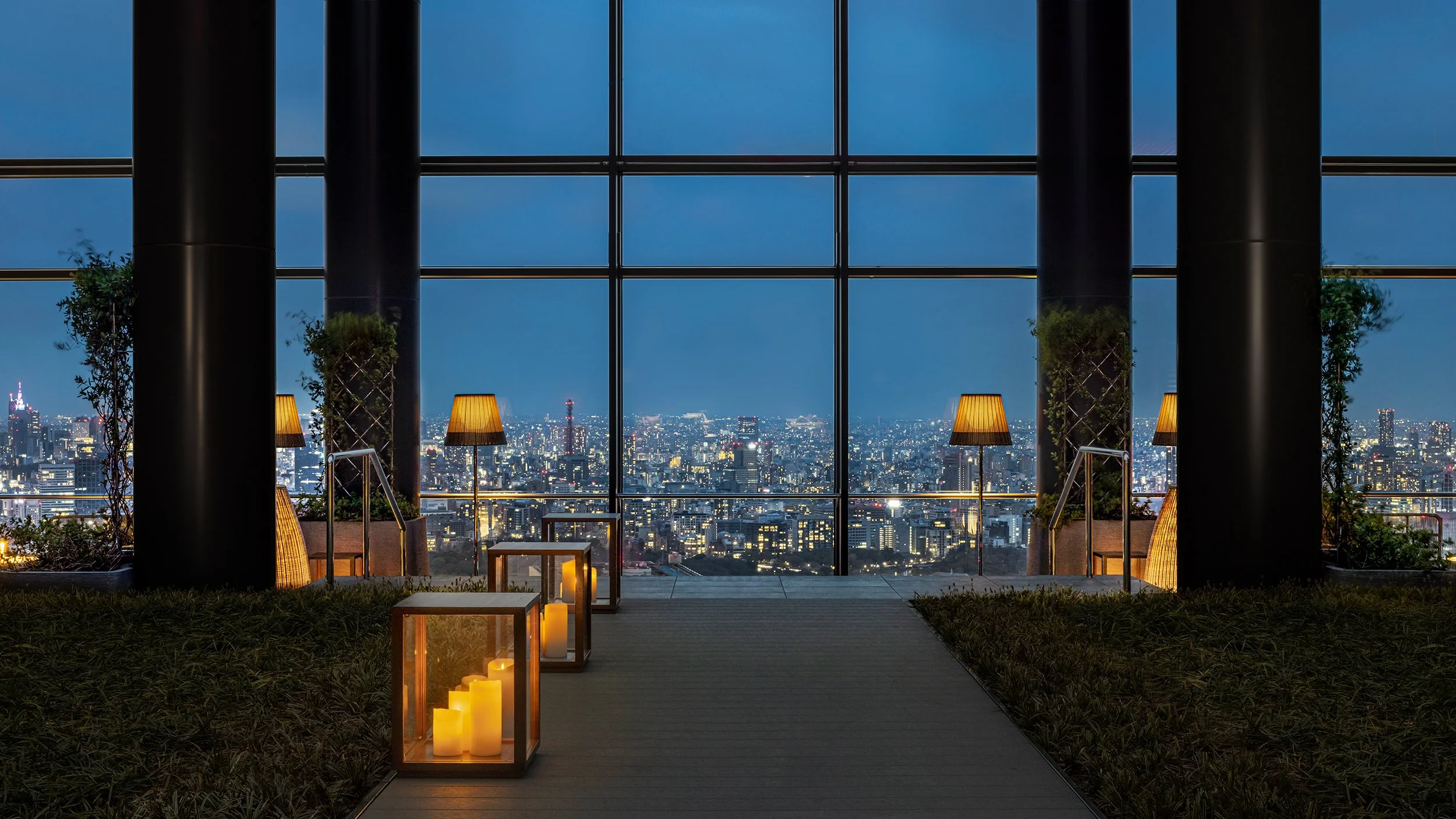
The terrace at Bulgari Hotel Tokyo
The Punch Room at Tokyo EDITION, Ginza
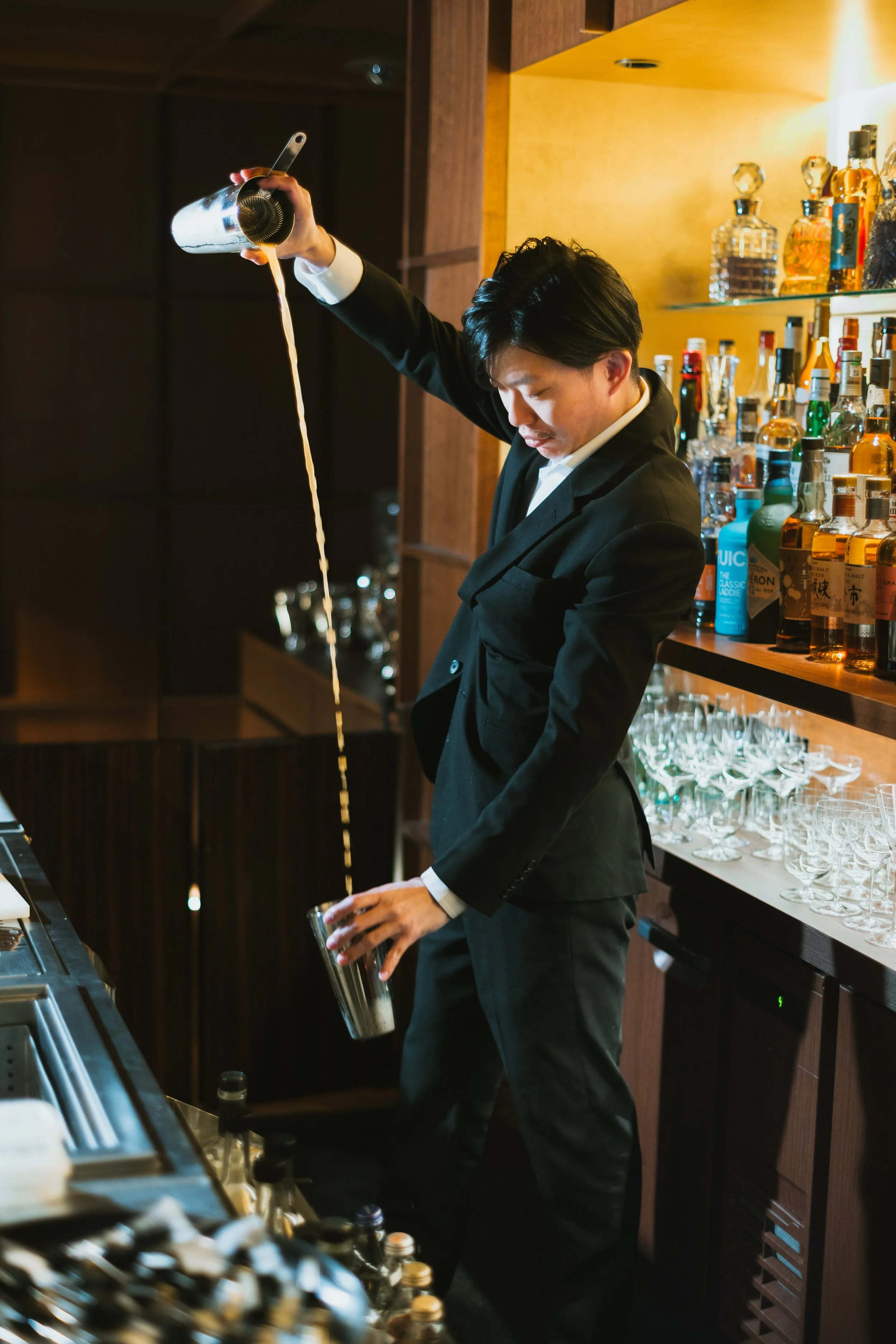
Yasuhiro "Yas" Kawakubo of The Punch Room at Tokyo EDITION, Ginza
Ginza has traditionally served as the temple of Japanese bartending—a realm of hushed tones, pristine uniforms, and the exacting choreography of the hard shake. Here, tradition doesn't simply receive respect; it commands obedience. At the Tokyo EDITION, Ginza, which debuted in 2024, Yasuhiro "Yas" Kawakubo is cheerfully subverting that orthodoxy.
As the hotel's Director of Bars overseeing the Punch Room, Kawakubo intentionally sidesteps the creation of yet another solemn, contemplative venue. Instead, he reinterprets Japanese sensibility through the framework of a Victorian-era London members' club—one energized by music that invites guests to unwind rather than maintain library silence.
Concealed on the mezzanine level, Punch Room evokes a clandestine retreat for sophisticated wanderers. Crafted by architect Kengo Kuma, the interior marries walnut-paneled ceilings and sumptuous velvet seating with understated Japanese elegance, evoking the ambiance of a British members' retreat. Dimly lit, enclosed, and richly textured, it provides a dramatic contrast to the neon-drenched energy of Chuo Street outside.
Kawakubo has earned respect within Tokyo's cocktail scene through his work at some of the city's most prestigious bars. Instead of presenting himself as a distant expert, he takes on the role of a warm host. "We wanted it to feel like home," he explains—an approach that softens the formality typically associated with Tokyo's high-end drinking establishments.
True to its identity, Punch Room stands as Japan's first bar devoted exclusively to punch. These aren't the sugary concoctions of yesteryear; the program offers contemporary Japanese renditions. Solo drinkers receive their portion in individual glassware, while groups selecting matching punches are served from a gleaming silver bowl with tableside ladle presentation.
As Kawakubo observes, "Punch may well be the first genuinely modern beverage, emerging from newly available ingredients along historic trading networks." The Wonderland collection revolves around punch's five classic components: spirits, spices, citrus, teas, and sugar. A highlight is an inventive yet sophisticated riff on the gin and tonic—the Wasabi Sonic (gin, wasabi, sencha, citrus, soda, tonic)."
The Wasabi Sonic pairs gin with gently steeped sencha tea, forming a delicate, fragrant foundation that celebrates Japanese tea tradition. Fresh wasabi root brings a mild, warming tingle rather than sharp heat, adding depth and vibrancy without dominating the palate. Light, crisp, and subtly intriguing, the drink closes with a refreshing sensation that reveals itself slowly, making it both accessible and uniquely memorable.
To create the Wasabi Sonic, mix 45ml wasabi distillate, 20ml green tea cordial (steep sencha in boiled water, strain, then dissolve 20% granulated sugar and 1% malic acid while warm), 5ml Suze, 15ml milk, and 5ml lemon juice. Refrigerate overnight, then strain through a coffee filter. Build the drink in a highball glass with an ice spear, topping with 30ml club soda and 20ml tonic water.
Yasuhiro "Yas" Kawakubo, Director of Bars, Punch Room
"The Punch Room Tokyo is a rare hotel bar removes traditional counters to eliminate the barrier between bartender and guest. Designed by Ian Schrager and Kengo Kuma, its unique style seamlessly blends 19th-century London club aesthetics with Western and Japanese sensibilities.”
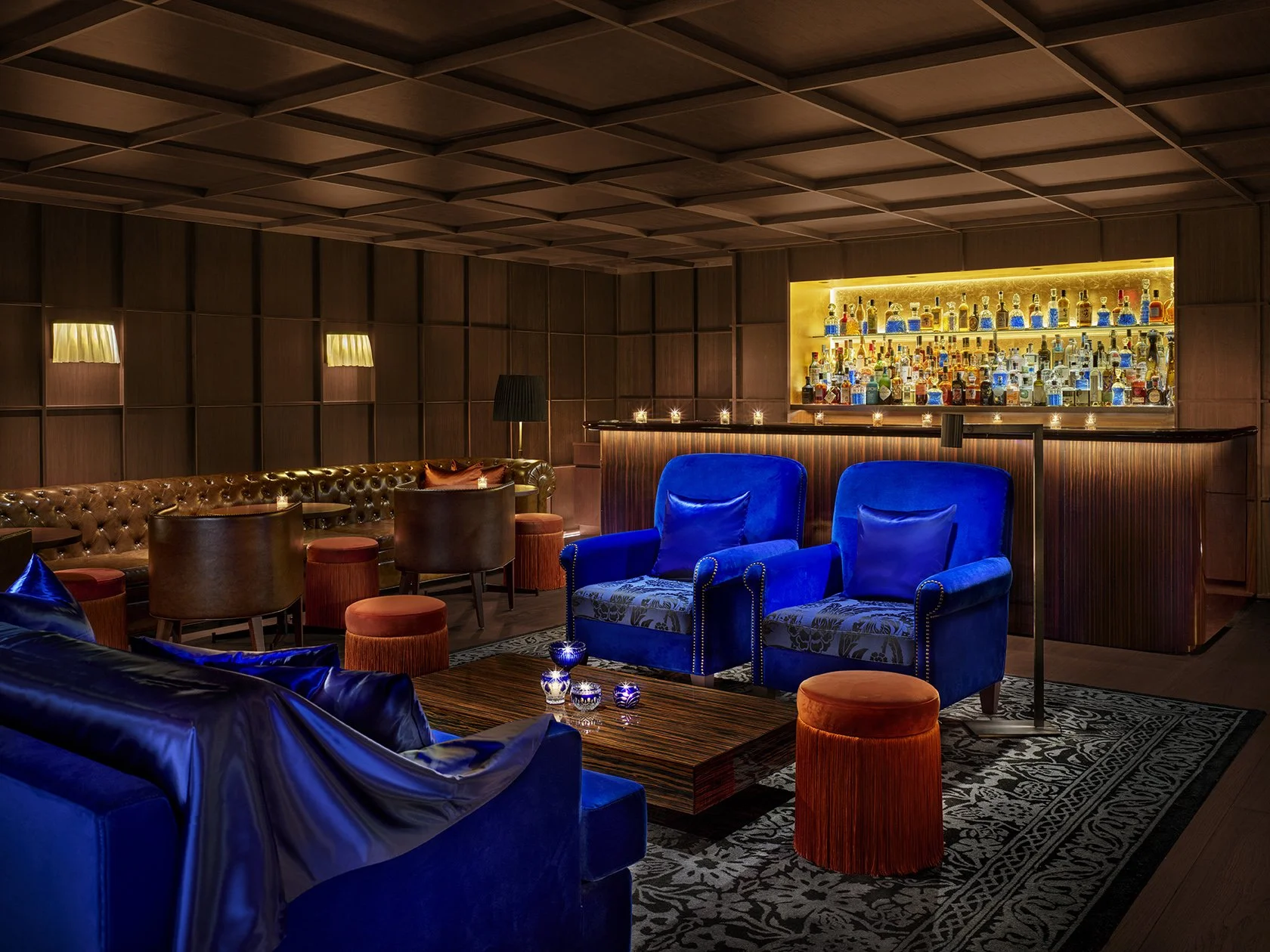
The Punch Room at Tokyo EDITION, Ginza
From its Meiji-era origins as an imported curiosity, Tokyo's cocktail culture has matured into a distinctly Japanese art form that now influences bars worldwide. In venues like Bar Qwang's jazz-soaked intimacy, Bar Trench's absinthe sanctuary, and the polished elegance of Bulgari Hotel Tokyo, a common thread emerges: Japanese hospitality as a force for reinvention. Bartenders like Yasuhiro Kawakubo with his theatrical punch service and Rogerio Igarashi Vaz with his absinthe ceremonies aren't merely preserving tradition—they're forging a new chapter where technical mastery serves genuine human connection. Today, as Tokyo reshapes global cocktail culture, it completes a cultural exchange that began over a century ago when Western drinks first arrived on its shores.
Nicholas Coldicott, author of Tokyo Cocktails, and expert on the local bar scene, reflects on this evolution:
“Japanese bartending fascinates me because it maintains its essential character despite rising prices and international acclaim. The 50 Best Bars list, Instagram, and global media have amplified its reach, yet the underlying craft hasn't changed. Young innovators and seasoned veterans may work in different styles, but they're guided by identical values.
Hospitality defines the bar—drinks are merely one expression of it. Top bartenders here refine endlessly, and like practitioners of tea ceremony or elite chefs, they step back rather than forward. There's no performance for show. The focus is entirely on the guest: why they've come—often for reasons quite unlike their New York counterparts—and how to deliver an exceptional experience. The cocktail must be impeccable because that precision is hospitality itself.
I understood this more clearly when a seventy-something bartender told me who he admired most. He named someone in his thirties with a modern, edgy style—outwardly his opposite. Yet he saw past appearances. The surface had changed, he said, but the commitment underneath hadn't. That convinced him Japanese bartending's essence would continue to flourish in the future.”

Nick Coldicott